The Co-opted Pulpit: How Rwanda’s Religious Leaders Chose the RPF Over God.
A troubling shift has taken place within Rwanda’s spiritual landscape. Religious institutions, tasked with defending the vulnerable and speaking truth to power, appear to have formed a quiet coalition with the ruling Rwandan Patriotic Front...
A troubling shift has taken place within Rwanda’s spiritual landscape. Religious institutions, tasked with defending the vulnerable and speaking truth to power, appear to have formed a quiet coalition with the ruling Rwandan Patriotic Front (RPF). From the Catholic hierarchy to prominent Protestant denominations like the ADEPR, a growing body of evidence suggests that major spiritual leaders have prioritized political survival and state alignment over their divine mandate.
Cardinal Kambanda’s Selective Memory and Strategic Silence
Cardinal Antoine Kambanda recently remarked that Rwanda has enjoyed 30 years without anyone being killed or having their home demolished. This narrative ignores documented realities on the ground and mirrors state rhetoric.
The Silence on Kizito Mihigo: When beloved Catholic gospel singer and former seminarian Kizito Mihigo died under highly suspicious circumstances in a police cell in February 2020, Kambanda and the Catholic leadership remained silent. Despite international outcry from human rights organizations suspecting foul play, the Church offered no public demand for accountability.
The Abandoned Bishops of Gakurazo: Decades after the 1994 tragedy, there remains a distinct lack of institutional push from the Catholic hierarchy to ensure a dignified, high-profile burial for the Catholic bishops and priests killed by Inkotanyi forces in Gakurazo. By failing to publicly champion their memory, the leadership protects the state from historical scrutiny.
Negotiating the Faith
This alignment extends beyond the Catholic Church. Reports have emerged of Muslim leaders being forced into restrictive negotiations with the RPF simply to retain the right to broadcast the traditional morning call to prayer (adhan), illustrating the state’s tight grip on all forms of public religious expression.
Erasing Divine Intervention: “Saved by the Inkotanyi, Not God”
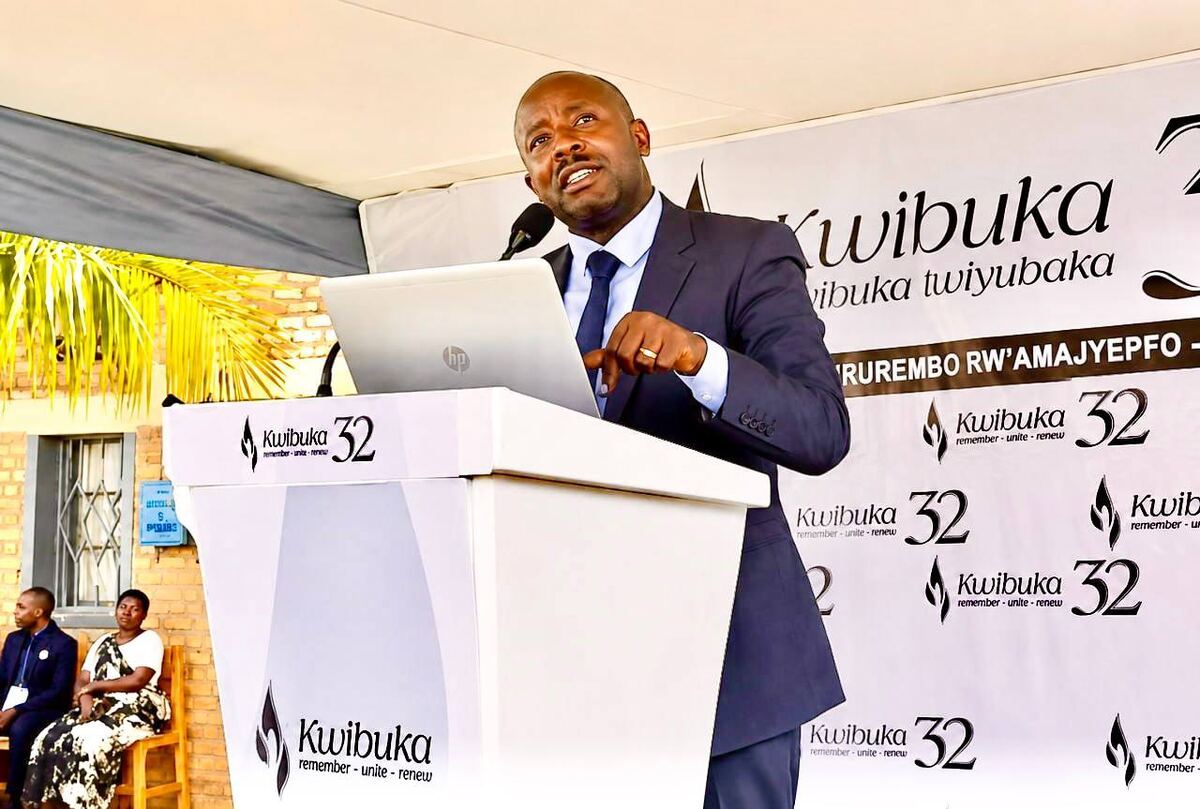
The state’s effort to elevate its own narrative above religious belief is openly displayed by its top officials. Jean-Damascène Bizimana, the Minister of National Unity and Civic Engagement, has repeatedly stated in public speeches that genocide survivors should stop claiming they were saved by God. Instead, he demands they declare they were saved exclusively by the RPF-Inkotanyi forces.
This sentiment is not an isolated opinion. Senior RPF cadre Tito Rutaremara echoed this exact rhetoric, reinforcing what critics describe as a systematic political effort to replace spiritual gratitude with absolute devotion to the ruling party.
Pacis TV and the Sanitization of Human Rights Abuses
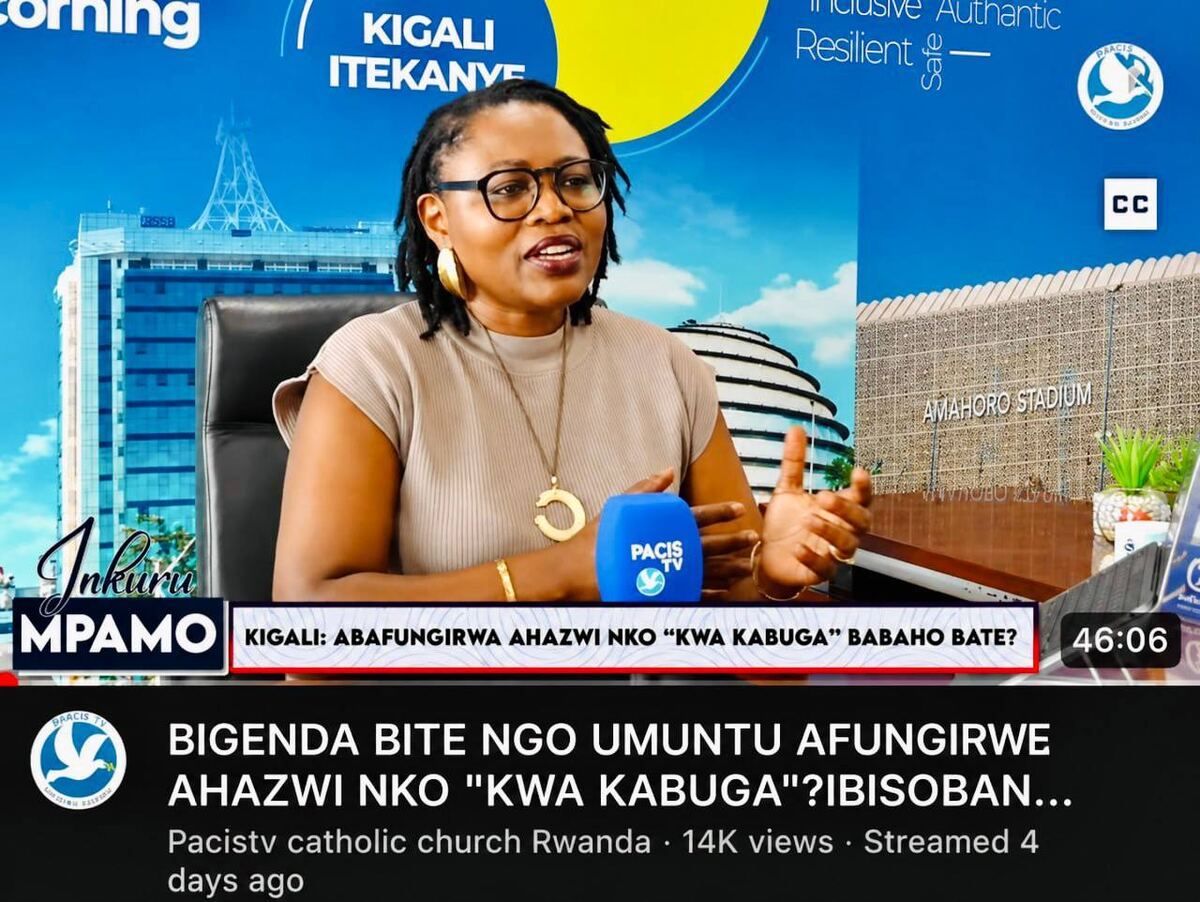
Perhaps the most glaring evidence of this Church-State coalition is found on Pacis TV, the official media outlet of the Catholic Church in Rwanda. Rather than acting as a voice for Christian ethics, the channel has hosted prominent government figures to defend controversial state policies.
On the YouTube program, the Church provided a platform to Emma Claudine Ntirenganya, a prominent media figure and spokesperson for the City of Kigali.
During the broadcast, Ntirenganya defended the government’s use of notorious, unofficial transit detention facilities, colloquially known as “Kwa Kabuga.” Her commentary directly dismissed human rights concerns regarding the degrading conditions inside these centers, where detainees face severe restrictions on basic necessities.
According to numerous reports from human rights organizations and former detainees, the reality inside these facilities stands in stark contrast to the official narrative. Where there is arbitrary detention, severe restrictions on access to sanitation facilities, denial of basic menstrual hygiene for women, and conditions that systematically strip individuals of their dignity.
Reports indicate that women in these facilities are denied the ability to clean themselves during their menstrual cycles and are permitted to use the toilet only once a day. In the broadcast, the philosophy of “my body, my rights” was openly dismissed, revealing how a Catholic-backed media channel is used to justify the stripping of human dignity.
The ADEPR Church: Mandating State Rhetoric Over the Gospel.
The compliance of religious institutions is further demonstrated within the Protestant sector. On June 6, 2026, during a commemoration event at GS Matyazo in Huye, Pastor Théogène Twagirayezu, the head of unity and resilience for the ADEPR Church, issued an explicit directive to church choirs and composers.
Twagirayezu openly ordered all choirs to stop using ambiguous or purely spiritual language in their music. He demanded that they explicitly and loudly sing about the “Genocide against the Tutsi” exactly as scripted by state policy, rather than focusing purely on messages of general comfort, the cross, or sorrow.
While preserving historical truth is vital, forcing religious choirs to strictly adhere to state-vetted vocabulary transforms worship into a tool for political messaging. When choirs are instructed on exactly what phrases they must “confess” from the altar, the line between praising God and serving the regime disappears entirely.
A Dangerous Precedent
When Cardinal Kambanda remains silent on the deaths of his own flock, when Church media defends the denial of basic hygiene to detained women, and when pastors command their choirs to sing state slogans, the church ceases to be a sanctuary.
Rwanda’s religious institutions are facing a profound moral crisis, seemingly transforming their pulpits into megaphones for the RPF. Institutions that once claimed a sacred responsibility to defend truth, dignity, and justice are increasingly accused of providing moral cover for political power. For critics, the question is no longer whether the church has a relationship with the state, but whether that relationship has become so close that faith itself is being subordinated to political loyalty.
As this debate continues, many believers are left asking a fundamental question: when the vulnerable need a voice and the oppressed seek refuge, will Rwanda’s religious leaders stand with God, or with the regime?








Loading comments…
Reader comments
Join the conversation