






The Dynastic Theater: How Jeannette Kagame’s Parliamentary Takeover Undermines Rwanda’s Separation of Powers.
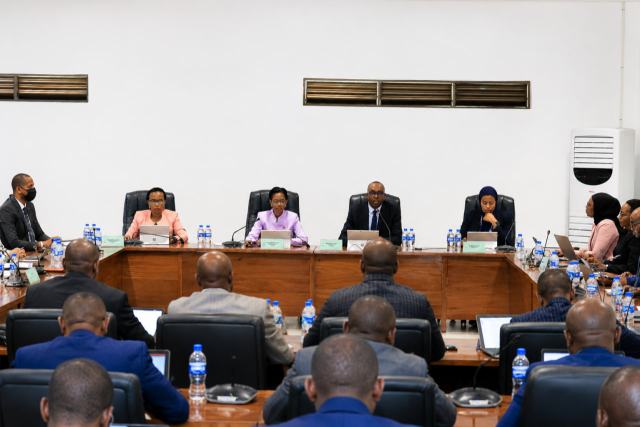
Inside the majestic chamber of the Rwandan Parliament in Kigali, a striking scene unfolds annually that challenges the traditional boundaries of constitutional governance. The room is packed to capacity, but the focal point is not a legislative debate, a constitutional vote, or a standard democratic procedure. Instead, the highest-ranking officials of the land, including supreme court judges, lawmakers, cabinet ministers, and top military generals, sit in rapt attention while First Lady Jeannette Kagame stands confidently at the parliamentary podium.
The event is officially presented to the public as a gala for the Unity Club, a non-governmental organization chaired by the First Lady to promote national reconciliation, but stripping away the public relations veneer reveals a stark constitutional anomaly. Using the legislative house for a private organization and positioning an unelected individual as the central figure before the state’s highest authorities represents a calculated display of dynastic power that erodes the fundamental separation of powers.
Under the Constitution of the Republic of Rwanda, Parliament is a sacred constitutional space reserved strictly for the representatives of the people and the formal, legal branches of government. The standing orders of the legislature explicitly define who has the legal right to stand at that podium, introduce business, or address the chamber, and this mandate is confined strictly to elected Members of Parliament, the Prime Minister, Cabinet Ministers defending government policy, or specifically invited foreign heads of state operating under strict international protocol.
In the legal architecture of Rwanda, the title of First Lady is a ceremonial social designation rather than a public office, meaning that Jeannette Kagame holds absolutely no legislative mandates, executive authorities, or judicial powers. Granting a private citizen’s non-governmental organization the right to requisition the House of Law and use the podium to address the state’s highest officials acts as a direct violation of parliamentary sanctity because a legislative chamber cannot be treated as a private banquet hall or an auditorium for a family foundation.
This practice introduces a profound subversion of the separation of powers, which is designed to act as an independent framework in which the executive, legislative, and judicial branches balance and check one another to prevent the concentration of absolute authority. During these gatherings, the President of the Senate, the Speaker of the House, the Prime Minister, Cabinet Ministers, and the Chief Justice are systematically summoned to sit as subordinates before an unelected individual. In normal democratic governance, there is no constitutional mechanism that empowers a president’s spouse to call a joint session of all three branches of government or command their presence in such a manner. When the very individuals responsible for checking executive overreach line up to praise a member of the President’s household insidethe well of parliament, it signals that the formal institutional hierarchy has been replaced by personal loyalty to the ruling family.
Perhaps the most telling aspect of these events is the deliberate inclusion of Rwanda’s security apparatus, as the invitations regularly bring together the top brass of the Rwanda Defence Force, the Rwanda National Police, national intelligence directors, and highly influential retired generals. Legally, the military and police report through a strict chain of command ending at the Commander-in-Chief and the Minister of Defence, meaning they answer to the state rather than to a civilian club or a presidential spouse. Bringing active and retired military commanders into a civilian parliamentary hall to pay homage to Jeannette Kagame demonstrates a performance of political submission rather than civic reconciliation, sending a clear message to both domestic actors and the international community that the security apparatus answers directly to the household.
This institutional theater takes place within a broader political environment characterized by severe oppression, where independent journalism has been systematically stifled, genuine political opposition is dismantled, and dissent is routinely met with harsh state penalties. In this climate, the choreography of these parliamentary events serves a specific psychological purpose by conditioning the Rwandan public to accept the Kagame family as the permanent, ultimate rulers of the state.
By normalizing the reality that Jeannette Kagame can command the judges who write the laws, the ministers who enforce them, and the generals who hold the weapons, the regime prepares the nation for political continuity through lineage, signaling that the reins of absolute power are safely held within the family hands regardless of formal future transitions. True national unity must be built on robust, transparent institutions and an unyielding respect for the rule of law, rather than demanding that independent state institutions bend the knee to an unelected figure inside the country's legislative home.
While the current political climate shields the ruling family from accountability, a functioning democracy or a future post-regime transition would inevitably trigger a rigorous legal prosecution against Jeannette Kagame and her high-ranking accomplices under the country's existing statutory framework. In a democratic court of law, the First Lady would face criminal charges under Law N°54/2018 on Fighting Corruption for the unlawful use of public property for unintended purposes, alongside charges under the general Penal Code for the usurpation of public powers and functions. Furthermore, the parliamentary speakers, cabinet members, and military commanders who facilitated this subversion would be prosecuted as co-offenders and accomplices for abusing their official functions, violating their constitutional oaths, and illegally breaking the state's military chain of command to pay fealty to a private citizen. By establishing an independent judiciary in the future, these laws will finally be applied impartially to prove that no individual, regardless of their family lineage, is above the constitutional architecture of the republic.
Related coverage


Loading comments…
Reader comments
Join the conversation