







PAC Hearings, Repeated Audit Findings, and the Question of Accountability in Rwanda.
The Public Accounts Committee (PAC) has once again announced a new round of hearings to examine financial irregularities identified by the Auditor-General across 76 public institutions. As in previous years, officials responsible for managing public funds will appear before parliament to explain audit findings ranging from procurement problems and delayed projects to idle assets and failures in financial management.
These hearings have become a familiar feature of Rwanda's governance landscape. They are widely covered by the media, closely followed by the public, and frequently presented as evidence that public institutions are being subjected to scrutiny. The Auditor-General identifies weaknesses, the PAC summons officials for explanations, recommendations are issued, and institutions are instructed to correct deficiencies.
The challenge is that many of the issues discussed today resemble those that appeared in audit reports several years ago.
Among the most notable cases examined by the PAC was the Rwanda Social Security Board (RSSB). Audit findings revealed that RSSB had acquired land valued at approximately Rwf 137.4 billion, with most of the plots remaining unused and lacking clear business plans. The Auditor-General also reported additional costs associated with these acquisitions, including hundreds of millions of francs in taxes and related expenses. PAC questioned RSSB officials extensively, and the case attracted significant public attention. However, public reporting focused primarily on the hearings themselves rather than on any subsequent sanctions, recoveries, or legal actions arising from the findings.
A similar pattern appeared in the case of a vocational training institution, where auditors found that workbenches had been purchased at prices far exceeding their estimated value. PAC demanded an internal investigation and referred the matter to anti-corruption authorities. The issue generated headlines and parliamentary debate, yet publicly available information provides limited visibility into the final outcome of the investigation or whether those responsible faced consequences proportionate to the losses identified.
The same concerns continue to emerge in successive audit reports. Delayed infrastructure projects, abandoned works, procurement irregularities, underutilized government assets, weak contract management, and failures in project supervision remain recurring themes. In 2026, audit reviews identified 18 stalled public projects valued at approximately Rwf 16.3 billion. The findings highlighted problems ranging from poor planning and inadequate supervision to failures in implementation. These shortcomings were serious enough to be discussed at the highest levels of government, yet they also reflected weaknesses that had appeared repeatedly in earlier audits.
Parliament's own records indicate that implementation of audit recommendations has long been a challenge. An analysis covering the period from 2012 to 2019 found that less than half of audit recommendations had been fully implemented. The result was a growing accumulation of unfinished projects, unresolved findings, and public resources tied up in works that failed to deliver their intended benefits. While subsequent reports have shown improvements in certain areas of financial reporting and compliance, recurring observations from the Auditor-General suggest that many structural problems remain unresolved.
Official data published in recent audit reports point to improvements in financial management across government institutions. A large majority of audited entities now receive clean audit opinions, and unlawful expenditures have declined compared with previous years. At the same time, the Auditor-General continues to report delayed projects, procurement weaknesses, idle investments, underperforming assets, and service delivery challenges. The coexistence of these two realities, improved compliance on paper alongside recurring operational weaknesses, has become a defining feature of Rwanda's public accountability discussions.
The role of the PAC itself deserves careful examination. Available public evidence does not demonstrate that the committee is corrupt, nor is there documented proof that it deliberately protects specific individuals. International parliamentary and audit-support organizations have, at times, cited Rwanda's PAC as an example of effective cooperation between legislators and audit institutions. The committee regularly questions senior officials in public sessions and has contributed to bringing audit findings into national debate.
Yet questions persist regarding the effectiveness of oversight mechanisms when the same categories of irregularities continue to appear year after year. The issue is not whether PAC identifies problems; the record clearly shows that it does. The issue is whether identifying problems consistently leads to corrective action, financial recovery, institutional reform, or personal accountability.
Rwanda's political environment also shapes perceptions of oversight. Parliament operates within a system dominated by the ruling party, and PAC members are part of that broader institutional framework. This proves a lack of independence and inevitably raises questions about the extent to which parliamentary oversight can challenge powerful interests when major audit findings involve influential state institutions or politically sensitive projects.
The result is a recurring cycle. Audit reports expose weaknesses. The PAC conducts hearings. Officials provide explanations. Recommendations are issued. New audit reports then identify many of the same categories of problems. The process generates visibility and public discussion, but the long-term impact is often more difficult to measure.
As the PAC begins another review of dozens of public institutions, the significance of the hearings will ultimately be judged not by the number of officials questioned or the amount of media coverage generated, but by whether the findings lead to measurable change. The central issue is not the existence of oversight mechanisms, but whether those mechanisms consistently translate audit findings into accountability, institutional reform, and responsible management of public resources.
More than two decades after PAC became one of the country's primary accountability institutions, that question remains at the center of the debate surrounding its effectiveness.
Related coverage
More from Rwanda
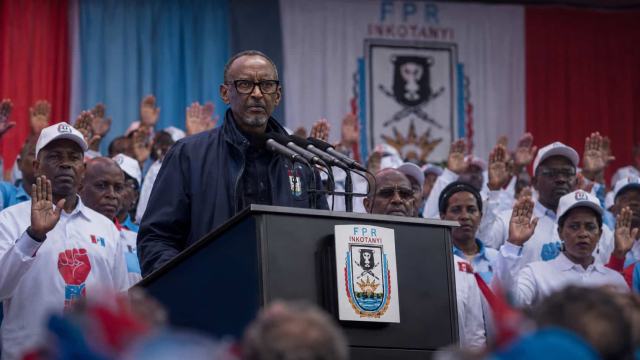
Rwanda: Oaths of Loyalty Under Scrutiny as Critics Warn of Political Intimidation
A debate over political loyalty oaths in Rwanda is raising questions about freedom of association, the right t...
BADRAMA: “They Say I Must Be Killed Because I Crossed a Red Line”
BADRAMA says his human-rights advocacy and political commentary have placed his life in danger, alleging repea...
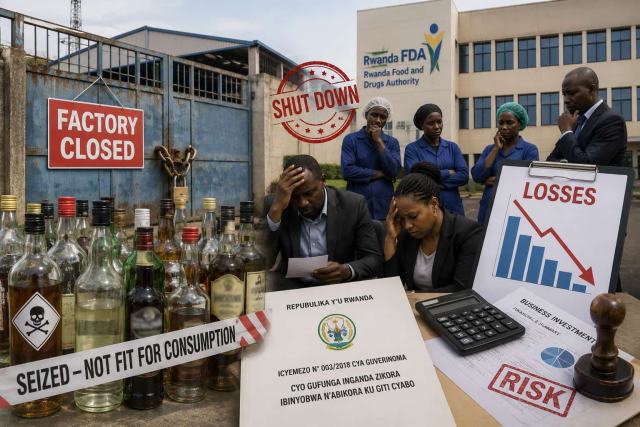
Disorderly Governance within the FPR Inkotanyi Administration as a Major Cause of Losses for Many Investors
The closure of several alcoholic beverage manufacturers has renewed debate over Rwanda FDA’s oversight, coordi...
Loading comments…
Reader comments
Join the conversation