






Can Paul Kagame and His Army Be Found Guilty of Genocide Committed in the DRC?
This article examines whether allegations concerning killings, forced displacement, sexual violence and other abuses attributed to Rwandan forces and allied armed groups in the DRC could meet the legal requirements for genocide, war crimes or crimes against humanity.
Available in
As the Democratic Republic of the Congo (DRC) continues its case against Rwanda before the International Court of Justice (ICJ), the debate remains focused on two key questions: What evidence would be required for the Republic of Rwanda to be found guilty of genocide? Secondly, do the allegations concerning killings committed in the DRC at different times by the Rwandan army, together with various rebel groups, meet the requirements under international law to be classified as genocide?
International law provides that, for a state or individuals to be convicted of genocide, it is not sufficient to demonstrate that killings or serious acts of violence occurred. The most critical element is proving the existence of a specific intent to destroy, in whole or in part, a protected group based on its ethnicity, national origin, or religion.
At this point, anyone who seeks to interpret the matter differently would be deliberately ignoring the fact that Hutus in the DRC, as well as Rwandan Hutu refugees who were killed there, were targeted because of who they were, namely because they were Hutu, and this is something that no one can deny. Furthermore, the plan was allegedly organized, as APR troops were prepared, military operations were planned to hunt them down and kill them, and these actions were carried out over a long period rather than occurring spontaneously.
This is strongly supported by the United Nations report commonly known as the Mapping Report, which concluded that numerous incidents that took place between 1996 and 1997 could warrant judicial examination as to whether there is evidence of genocidal intent. The report states that, in various parts of North and South Kivu, Maniema, and Équateur, there were widespread attacks targeting Hutu refugees and Hutu civilians in a similar pattern across many locations.
The report explains that, in some places, people were summoned to meetings under the pretext that they would receive information about returning to Rwanda or be given food, only to be killed afterward. It also states that women, children, and elderly people were killed, and that little or no distinction was made between civilians and those suspected of being combatants. According to the report, this pattern of conduct may be regarded as evidence that the operations had been planned in advance.
This resembles other operations carried out against Hutus in Rwanda between 1990 and 1997, during which they were told they were being called to meetings or would receive food, only to be shot or bombed after gathering.
The report further states that hate speech expressed in certain areas, in which all Hutus were treated as a single category and encouraged to be hunted down and killed, may also constitute evidence that a court could consider when determining whether there was an intent to destroy a particular group.
Among the many incidents mentioned, the report cites the example of what happened after Hutu refugees had been pursued from eastern Zaire (now the DRC) and eventually reached Mbandaka and Wendji, more than 2,000 kilometers from Rwanda's border. After some former Ex-FAR/Interahamwe combatants had already been disarmed by local police, APR/AFDL forces allegedly opened fire on defenseless Hutu refugees, resulting in the deaths of many thousands of people. The report states that this conduct, together with similar incidents elsewhere, could lead a court to conclude that there was a plan or policy amounting to genocide.
However, the report itself does not conclude that genocide occurred; such a determination can only be made through international judicial proceedings if the matter is brought before the appropriate court.
For that reason, the report concludes by calling for a full investigation and an international judicial process to determine whether these acts satisfy the legal requirements to constitute genocide. To date, although the DRC has filed a case before the ICJ, no international court has reached a final judgment finding Rwanda guilty of genocide in the DRC. The final decision will depend on the assessment of the evidence and the application of international law in those proceedings.
What is particularly tragic is that serious acts of violence allegedly committed by the Rwandan army together with various rebel groups have continued up to the present day, with Rwanda maintaining that its military operations are aimed at neutralizing threats to its national security. Since 2021, numerous killings have allegedly been committed by AFC/M23 and the Rwanda Defence Force (RDF), according to the United Nations and international human rights organizations. Rwanda denies involvement in these crimes and also denies supporting AFC/M23.
Under international law, many of the acts attributed to President Paul Kagame, his army, and their allies could constitute crimes against humanity, as they are alleged to have formed part of widespread or systematic attacks directed against civilians.
Unlawful Killings of Civilians
Various United Nations reports have documented allegations that civilians were unlawfully killed in areas under the control of the RDF/AFC-M23 alliance, including the incidents reported in Kishishe (Rutshuru Territory, North Kivu), as well as in Bambo and Bugina in North Kivu. These reports describe allegations of summary and extrajudicial executions of civilians. Under international criminal law, widespread or systematic killings directed against a civilian population may constitute crimes against humanity where the requisite legal elements are established before a competent court.
Conflict-Related Sexual Violence
Numerous reports have documented allegations of rape and other forms of conflict-related sexual violence committed against women and girls. Under the Rome Statute of the International Criminal Court, rape, sexual slavery, enforced prostitution, forced pregnancy, enforced sterilization, and other forms of sexual violence may constitute both crimes against humanity and war crimes when committed under the circumstances defined by international law.
Forced Displacement of Civilian Populations
The armed conflict has displaced hundreds of thousands of civilians from their homes throughout eastern Democratic Republic of the Congo. The article further alleges that Congolese civilians have, in certain areas, been forcibly removed from their land and replaced by Rwandan settlers. Such allegations remain contested and have not been determined by an international court. Nevertheless, under international humanitarian law, the unlawful deportation or forcible transfer of civilians, where not justified by imperative military necessity, may constitute both a war crime and, when carried out as part of a widespread or systematic attack against civilians, a crime against humanity.
Other alleged violations documented in various reports include enforced disappearances, arbitrary detention of civilians, torture, the recruitment and use of children in armed conflict, persecution, and other serious abuses prohibited under international humanitarian law and international human rights law.
President Donald Trump has repeatedly stated that the killings and conflict that have persisted for decades in eastern DRC must come to an end. During remarks delivered in support of the peace agreement between the DRC and Rwanda in June and December 2025, Trump stated: "The conflict in eastern DRC has lasted for more than 30 years and has claimed the lives of millions of people in horrific circumstances."
President Félix Tshisekedi has continued to call on the international community to recognize what he describes as a "silent genocide" in eastern DRC and has urged the establishment of an international investigation into the alleged crimes, continuing to press strongly for such action.
In 2026, the DRC established the Council for the Examination of Atrocities in the DRC to collect evidence, support the pursuit of justice, and seek reparations for victims.
While commemorating these tragic events, one religious leader, Pastor Joel Osteen of the United States, delivered a message to the people of the DRC, stating: "As we commemorate August 2 – Day of Remembrance, we honor the victims, uphold the values of truth, justice, and peace, and renew our shared commitment to ensuring that such atrocities never happen again."
The world continues to watch those implicated in this matter, with many calling for Paul Kagame, his army, and the rebel groups with which they have allegedly cooperated to be held accountable for these grave crimes. To date, more than six million people are said to have lost their lives in the conflicts allegedly waged by Paul Kagame.
Related coverage
More from Congo
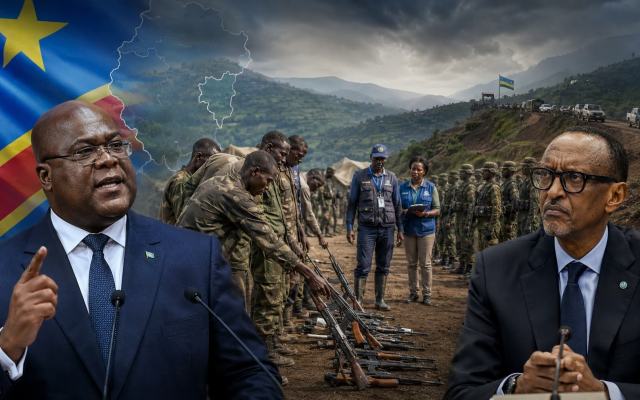
Rwanda Fears the Dismantling of the FDLR Could Force the Withdrawal of RDF Troops from the DRC
A disputed protocol on the disarmament, demobilization and cantonment of FDLR fighters has intensified tension...
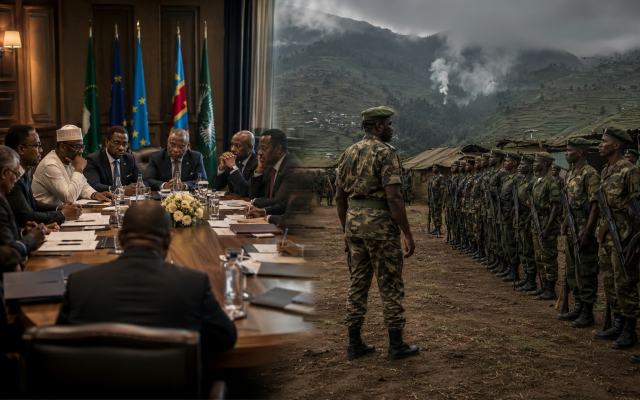
DRC: Peace Talks Continue, but AFC/M23 Keeps Intensifying Military Preparations
As peace negotiations on eastern DRC continue, AFC/M23 says it has trained 9,318 new commandos, raising concer...
 Breaking
Loading comments…
Reader comments
Join the conversation