







The Architecture of Displacement: How U.S. Reports and Global Inquiries Expose Rwanda’s Predatory Land Seizures.
 alt="" width="1024">
While the Rwandan government actively markets Kigali as a hyper-modern, investor-friendly African metropolis, international human rights monitors, investigative bodies, and official U.S. reporting reveal a troubling underbelly to this rapid urban transformation. Beneath the surface of polished master plans lies a state-sanctioned mechanism of predatory land expropriation.
Official evaluations, including U.S. Department of State Human Rights Reports and USAID land tenure studies, consistently point out that the Rwandan state systematically bypasses its own legal frameworks to execute forced, undercompensated land seizures. In neighborhoods like Kangondo, Kibiraro, and Kagugu, the regime has weaponized urban renewal,not only to clear prime real estate for wealthy developers but also to break up organized communities and dismantle pockets of potential political opposition.
1. The Legal Illusion: Systematic Undercompensation and Coercion
Under Rwandan law, the state is required to provide “fair, just, and prior” compensation before expropriating land for public utility. However, U.S. Department of State reports on human rights practices have repeatedly documented that this legal standard is routinely violated in practice.
- The Valuation Trap: The government utilizes outdated, state-mandated valuation scales that sit far below true market prices. Ordinary citizens are forced to accept fractions of what their ancestral land is worth, effectively rendering them unable to afford housing anywhere near their original communities.
- Coerced Consent: Property owners who attempt to negotiate or reject government offers face intense state intimidation. Local administrative authorities, backed by security forces, frequently threaten dissenters with administrative penalties, tax audits, or outright arrest under vague charges of “sabotaging government programs.”
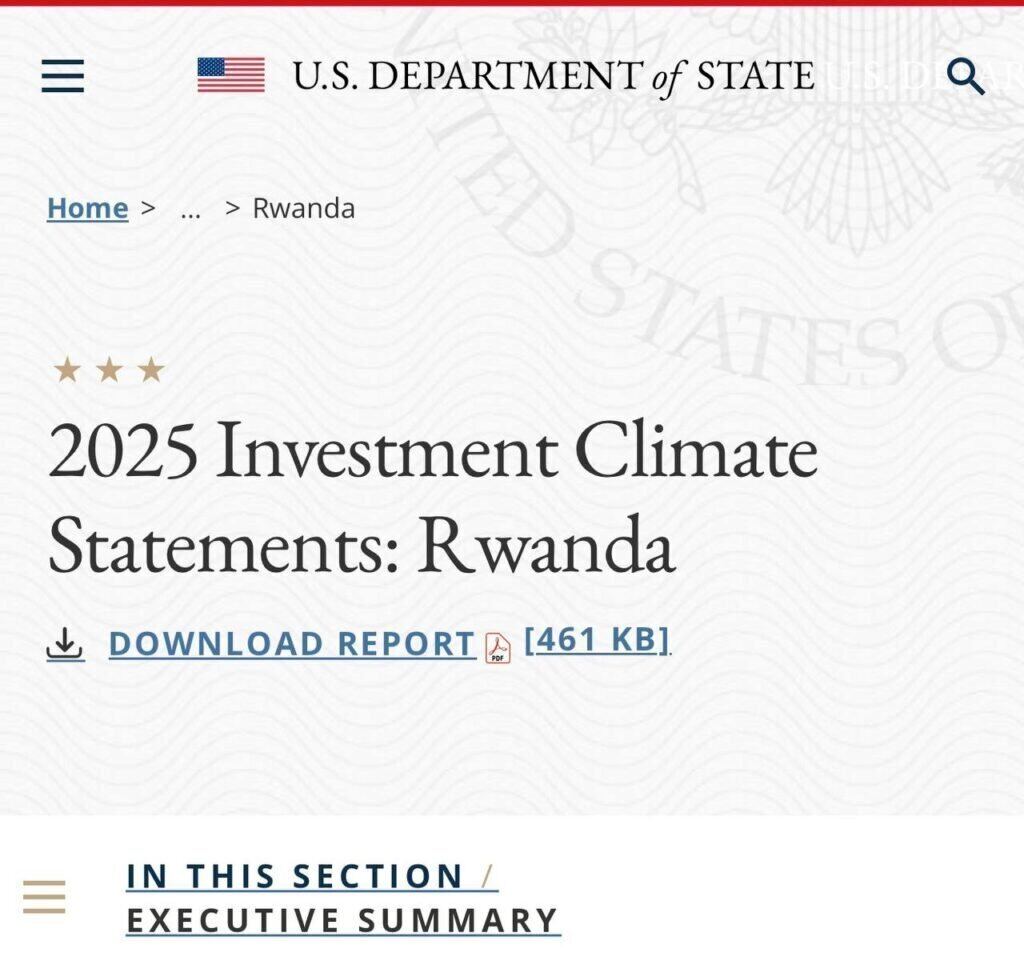
- Systemic Payment Delays: Even when an expropriation price is agreed upon, payments are routinely delayed for months or years, leaving displaced families financially stranded. This echoes complaints noted in U.S. Investment Climate Statements, where even foreign corporations face extreme delays in government contract payouts and arbitrary regulatory shifts.
2. Kangondo and Kibiraro: The Cruel Reality of “Bannyahe”
Perhaps the most egregious and highly publicized flashpoint of predatory state eviction occurred in the twin neighborhoods of Kangondo and Kibiraro, informally dubbed “Bannyahe” by locals. Situated in the upscale Nyarutarama area of Kigali, these vibrant, working-class communities sat on highly coveted real estate.
- The Forced Swap Scheme: Instead of receiving direct financial compensation to rebuild their lives, thousands of Kangondo residents were subjected to a state-imposed asset swap. The government ordered them to relocate to shoddy, poorly constructed flats in Busanza, far outside the city center, which severed their access to urban livelihoods.
- Violent Demolitions: Residents who launched brave legal challenges to demand fair cash compensation were met with ruthless state force. In late 2020 and throughout the pandemic, authorities utilized heavy machinery to bulldoze homes, sometimes while families’ belongings were still inside,under the guise of clearing “high-risk wetlands.””
- Silencing the Resistance: Activists and community leaders who spoke to international media or organized legal defense funds were systematically harassed by state security. Human rights organizations noted that the state’s heavy-handed response in Kangondo was designed to send a chilling message to the rest of the country: the regime’s elite projects supersede your property rights.
3. Kagugu: The Displacement of the Middle Class
The predatory nature of Rwandan land governance is not restricted solely to low-income settlements. In districts like Kagugu, a rapidly expanding suburb of Kigali, middle-class Rwandans and small-scale farmers have faced identical patterns of exploitation.
- Re-zoning as an Expropriation Tool: In Kagugu, the state has repeatedly altered municipal master plans overnight, suddenly re-zoning privately owned agricultural or residential plots for “high-density commercial development.”
- The “Build or Forfeit” Mandate: Under local regulations, if an ordinary citizen cannot afford to build the multi-million-dollar commercial structures demanded by the new zoning laws within a strict timeline, the state reserves the right to seize the land and auction it off to wealthy investors, often linked directly to the ruling Rwandan Patriotic Front (RPF) or its corporate conglomerates.
- Eradicating Land Security: USAID land tenure analyses have historically noted that while digitizing land registries improved bureaucratic efficiency, it did not protect citizens against top-down state predation. When the ruling elite desires a plot of land, the digital title offers no shield against forced acquisition.
4. The Political Undercurrent: Displacing Communities to Prevent Dissent
Independent analysts and opposition critics argue that these mass evictions serve a dual purpose for President Paul Kagame’s regime. Beyond the massive financial windfalls generated for RPF-linked developers, the clearing of neighborhoods like Kangondo and Kagugu is an exercise in political engineering.
- Dismantling Cohesive Communities: Working-class neighborhoods naturally foster tight-knit social networks, mutual aid, and independent local leadership. By scattering these populations across disparate, state-controlled relocation sites far outside the capital, the regime effectively neutralizes spaces where collective grievances could turn into organized political opposition.
- Enforcing Total Dependency: Stripping ordinary Rwandans of their land,often their only tangible asset,forces them into complete economic precarity. A population preoccupied with basic survival, lacking stable shelter, and dependent on state-allocated housing is far less likely to challenge an authoritarian government.
A Facade Built on Stolen Ground
The international community can no longer separate Rwanda’s economic metrics from its systemic domestic injustices. The skyscrapers and immaculate streets of Kigali, heavily praised by foreign delegations, are physically and economically built on land systematically taken from ordinary citizens without fair recompense.
U.S. documentation and global human rights investigations expose a grim reality: in Kagame’s Rwanda, private property is a privilege reserved
exclusively for the ruling elite and foreign investors, while for ordinary citizens, a home can be legally demolished and erased at the state’s whim of the state.
https://www.state.gov/reports/2025-investment-climate-statements/rwanda
Related coverage
More from Human Rights

BADRAMA: How Life as a Child Soldier Shaped His Human Rights Activism
Rwandan activist Mupende Ramadhan, known as BadRama, describes how his experiences as a child soldier shaped h...

Loading comments…
Reader comments
Join the conversation