
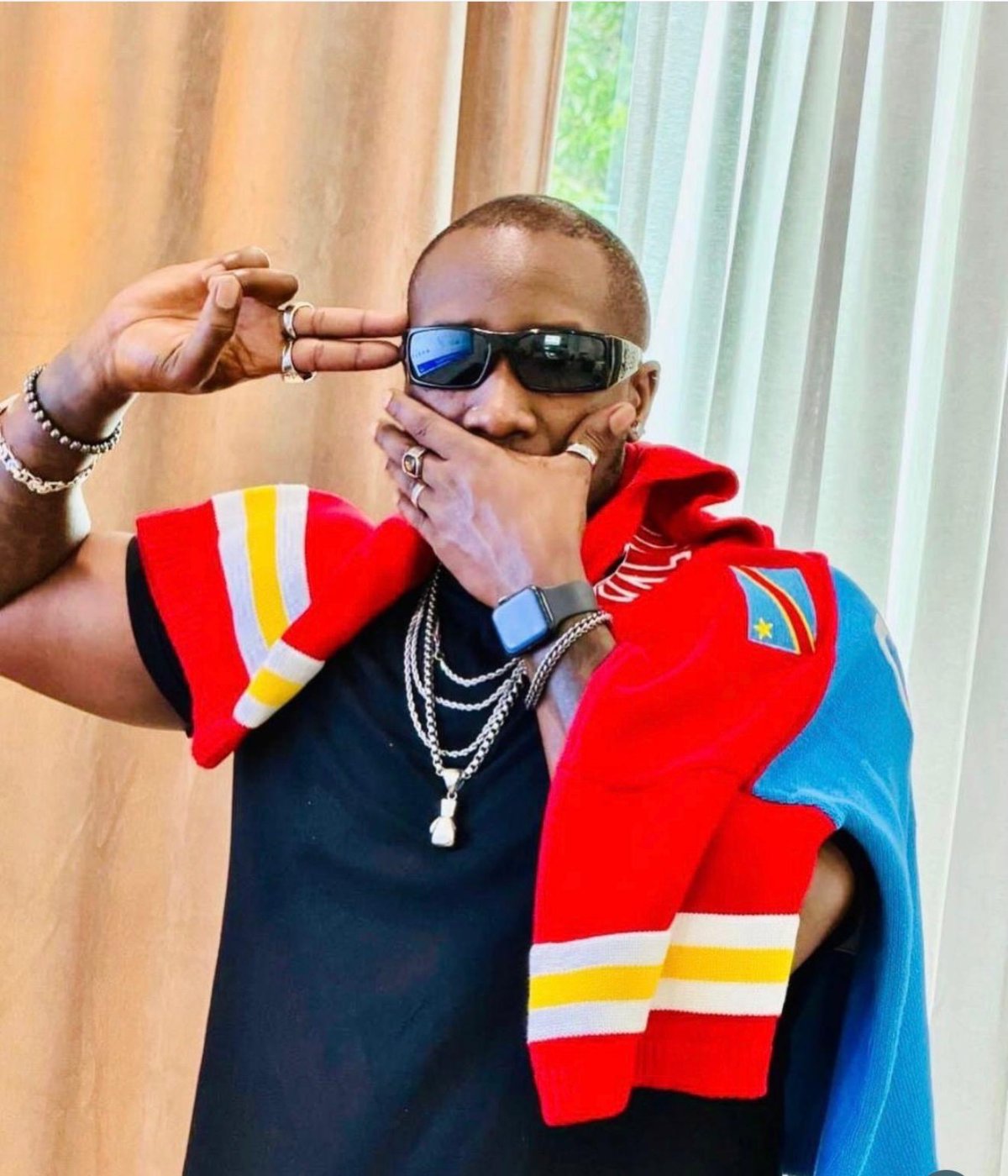






Karuretwa Replaces Rwivanga: Another Reshuffle, or a Sign Kagame Is Feeling the Pressure?
The appointment of Brigadier General Patrick Karuretwa as Rwanda Defence Force spokesperson may appear routine at first glance. Officially, he replaces Brigadier General Ronald Rwivanga, who recently left the position to head the Eastern Africa Standby Force (EASF). Governments replace spokespersons all the time.
But Rwanda's political system is not built on routine appointments.
In a country where power remains heavily centralized around President Paul Kagame and a small circle of trusted military insiders, personnel changes often reveal more than official press releases are willing to admit.
The real question is not whether Karuretwa is qualified. The real question is why Kagame chose him.
If the goal was simply to fill a vacant communications role, the RDF already had experienced officers capable of handling media relations. Deputy spokesperson Lt. Col. Simon Kabera was available. Other communication professionals existed within the military structure.
Instead, Kagame selected another veteran insider whose career extends far beyond public relations.
Karuretwa has served as Defence and Security Adviser to the President, Director General of International Military Cooperation, and President of the Military High Court. These are not ordinary assignments. They are positions reserved for individuals who enjoy significant trust within Rwanda's security establishment.
That fact alone makes this appointment politically significant.
For years, Ronald Rwivanga was more than a spokesperson. He was one of Kagame's most trusted security operatives, with experience spanning intelligence, strategic communications, and elite security structures. When Rwivanga departed, Kagame did not turn to a younger generation of officers or civilian communicators. He simply replaced one trusted insider with another.
This pattern has become increasingly visible across Rwanda's security apparatus.
As international scrutiny intensifies over Rwanda's involvement in eastern Congo, Kagame appears to be relying more heavily, not less, on a narrow circle of loyal military figures who have been part of the system for years.
That reality matters because the role of RDF spokesperson in 2026 is fundamentally different from what it was a decade ago.
Today, Rwanda faces growing diplomatic pressure, sanctions against senior military officers, criticism from international organizations, and repeated reports concerning the conflict in eastern Democratic Republic of Congo.
The spokesperson is no longer merely explaining military exercises or issuing routine statements. The spokesperson has become one of the regime's most important tools for managing international perception.
In that context, Karuretwa's appointment begins to look less like a communications decision and more like a strategic political move.
Interestingly, Karuretwa appears in a 2025 United Nations Group of Experts report as part of senior RDF coordination structures connected to Rwanda's military response and command architecture relating to developments in eastern Congo. The report does not accuse him of criminal conduct. However, it places him within the network of senior officials involved in managing one of the most internationally scrutinized security crises facing Rwanda today.
That distinction is important.
Karuretwa is not known internationally as a controversial figure. Unlike some other RDF commanders, he has not been sanctioned by the United States, European Union, United Kingdom, or the United Nations. He has not been publicly indicted by any international tribunal. His reputation remains that of a disciplined insider trusted by the system.
Precisely for that reason, Kagame may view him as the ideal face of the RDF during a period of mounting pressure.
The appointment suggests a leader who is prioritizing message control, institutional loyalty, and strategic communication as international criticism grows.
It also raises broader questions about the direction of Rwanda's leadership.
Why does Kagame continue to recycle authority among the same small network of military elites three decades after taking power?
Why are security insiders increasingly occupying roles that require public engagement and political communication?
And what does it say about the confidence of the regime when trusted military figures remain the preferred solution to nearly every major challenge?
Supporters of the government will argue that experience matters during difficult times. Critics will argue that the appointment reflects a system that struggles to renew itself and increasingly relies on familiar faces to manage growing pressures.
What cannot be ignored is the timing.
Karuretwa arrives at a moment when Rwanda faces unprecedented international attention over the Congo conflict, increasing diplomatic challenges, and growing questions about the long-term sustainability of governance built around a narrow security elite.
Whether this appointment proves to be a simple reshuffle or evidence of leadership under pressure remains to be seen.
But one thing is clear: Kagame is not changing the cards in his hand. He is betting once again on the same circle of trusted insiders who have helped sustain his system for decades.
The question is whether that strategy will continue to work in a rapidly changing regional and international environment.
Related coverage
More from Opinion
BadRama: Terror, Deception, Exploitation and Arrogance Have Become the Pillars of Paul Kagame's Rule
BadRama argues that fear, deception, exploitation and arrogance have become central features of Paul Kagame’s...
Productivity First, Wages Later? The Debate Rwanda Cannot Avoid.
Rwanda’s Prime Minister, Dr. Justin Nsengiyumva, recently reignited a long-running debate about wages, product...
From “Genocide Accomplice” to Honored Partner: The Selective Politics of Memory in Kagame’s Rwanda.
The inauguration of a new Genocide against the Tutsi memorial in Paris highlights a contradiction that Rwanda’...
Loading comments…
Reader comments
Join the conversation