




Kagame’s June 27 speech on the weaponization of genocide and the politics of intimidation.
President Paul Kagame's address during the Unity Club Intwararumuri national reflection event on June 27, 2026, was officially presented as a moment of remembrance. Instead, it delivered one of the strongest messages in recent years, suggesting collective suspicion toward Rwanda's Hutu population while again invoking the 1994 Genocide against the Tutsi as the central framework for discussing present-day politics.
Although President Kagame did not explicitly mention "Hutus" by name throughout several controversial passages, the speech unmistakably referred to Rwanda’s Hutu population collectively.
According to the address, Hutus who did not personally participate in the genocide but remained silent share moral responsibility because they failed to stop the killings. The speech further suggested that silence itself reflected agreement with the crimes or a willingness to participate under different circumstances. Such arguments inevitably revive longstanding debates over collective responsibility. Rwanda's official post-genocide policy, embodied in the "Ndi Umunyarwanda" initiative, promotes a single national identity that rejects ethnic divisions.
Another controversial element of the speech concerned perceptions held by genocide survivors.
The President suggested that some Tutsi genocide survivors may look at a Hutu, even one who did not participate in the killings, and wonder why that person is alive while members of their own families were killed. The Statements of this nature reinforce an atmosphere in which innocence must constantly be demonstrated rather than presumed. He also points to remarks suggesting that no Hutu should object to being associated with the label "Interahamwe," but instead should explain why they are not.
President Kagame also emphasized that the RPF chose forgiveness rather than revenge after ending the genocide, describing this restraint as a defining characteristic of the current political system. The speech referenced refugees who returned from camps in what is now the Democratic Republic of the Congo, suggesting that many had participated in killings but were nevertheless accepted back into Rwanda.
That presenting an entire refugee population or broader ethnic community as collectively implicated risks undermining the very reconciliation that official policy seeks to promote.
The speech also echoes previous public messages that have encouraged younger generations to acknowledge or apologize for crimes committed before they were born, a position that continues to generate debate over the boundaries between remembrance and inherited responsibility.”
President Kagame said that speaking openly about the genocide brings healing and relief. However, Rwanda's public discussion of the genocide remains tightly controlled. Only testimonies and historical interpretations consistent with the government's official narrative receive public space, while the crimes committed by the RPF during and after the war face significant legal and political barriers.
This tension has remained one of the most contested aspects of Rwanda's post-genocide memory politics. The speech concluded by criticizing opposition politicians, warning them against individuals who encourage ambitions of becoming president. It is interpreted that political competition remains tightly constrained and that the presidency is portrayed as effectively inaccessible to challengers. Such rhetoric inevitably fuels broader questions about political pluralism and democratic succession in Rwanda.
The significance of the June 27 address lies not only in what it said, but also in the timing and tone with which it was delivered. More than thirty years after the genocide, many Rwandans continue to ask whether national unity is best preserved through repeated warnings about past atrocities or through greater emphasis on equal citizenship, individual accountability, and open political dialogue. Repeated messages that appear to assign enduring suspicion to one section of the population risk deepening division rather than healing it, while also reinforcing a political environment in which historical memory becomes intertwined with contemporary governance.
As Rwanda continues to define its future, President Kagame's latest speech has once again placed difficult questions at the center of public debate: can reconciliation flourish where collective suspicion persists, and can genuine national unity emerge if historical remembrance is increasingly perceived as a tool of political authority rather than a shared commitment to preventing future violence?
Related coverage
More from Congo
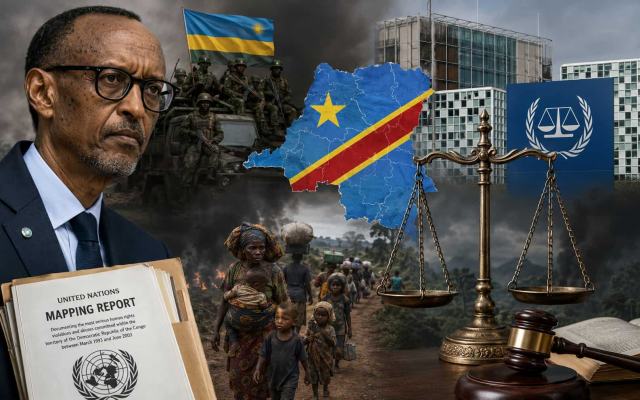
Can Paul Kagame and His Army Be Found Guilty of Genocide Committed in the DRC?
This article examines whether allegations concerning killings, forced displacement, sexual violence and other...
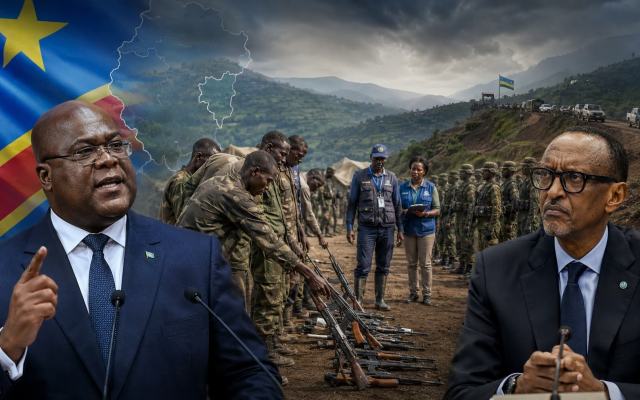
Rwanda Fears the Dismantling of the FDLR Could Force the Withdrawal of RDF Troops from the DRC
A disputed protocol on the disarmament, demobilization and cantonment of FDLR fighters has intensified tension...
DRC: Peace Talks Continue, but AFC/M23 Keeps Intensifying Military Preparations
As peace negotiations on eastern DRC continue, AFC/M23 says it has trained 9,318 new commandos, raising concer...
Loading comments…
Reader comments
Join the conversation