


International Pressure Mounts as U.S. And EU Target M23 Leadership and Rwandan Military Figures.
The international community has intensified pressure on the March 23 Movement (M23) rebel group and individuals accused of supporting its military operations in the eastern Democratic Republic of the Congo (DRC). Recent sanctions imposed by the United States and the European Union reflect growing concern about the continued violence, humanitarian suffering, and regional instability linked to the conflict.
Among the latest measures, the U.S. Department of the Treasury’s Office of Foreign Assets Control (OFAC) sanctioned John Imani Nzenze, also known as “Idi,” who serves as M23’s chief of intelligence. U.S. authorities describe him as a key figure within the rebel movement, responsible for coordinating intelligence gathering and supporting military operations alongside M23 commander Sultani Makenga.
The sanctions are part of a broader effort by Western governments to disrupt networks believed to be facilitating armed activity in eastern Congo, where years of conflict have displaced millions of civilians and destabilized the wider Great Lakes region.
The Role of John Imani Nzenze
According to U.S. and European authorities, Nzenze has played a central role in M23’s military structure. His involvement with the movement dates back to the group’s original 2012 rebellion, during which he reportedly commanded one of its brigades before rising through the ranks.
As head of intelligence, Nzenze is accused of overseeing reconnaissance operations, coordinating battlefield information, and assisting strategic military planning. Western governments argue that his position has made him a critical component of M23’s ability to sustain military campaigns across North and South Kivu provinces.
The sanctions imposed against him include asset freezes, restrictions on financial transactions, and travel limitations intended to isolate him from international banking systems and support networks.
Diplomatic Tensions Against Rwanda
The latest sanctions come amid continuing reports that Rwanda has provided military support to M23. The government of Rwanda has consistently rejected accusations that it directly backs the rebel group, maintaining that its security concerns stem from the presence of the Democratic Forces for the Liberation of Rwanda (FDLR), an armed group operating in eastern Congo that Kigali considers a threat to national security.
However, several international organizations, United Nations experts, Western governments, and independent researchers have concluded that elements of the Rwanda Defence Force (RDF) have supported M23 operations. These findings have contributed to growing diplomatic friction between Kigali and several Western capitals.
The dispute intensified following peace efforts brokered by international mediators. Although regional and international actors have repeatedly called for de-escalation and troop withdrawals, fighting has continued in several areas of eastern Congo, undermining diplomatic initiatives aimed at ending the conflict.
U.S. and European Sanctions Expand
In response to what they describe as continued support for M23 operations, the United States and the European Union have expanded sanctions against both rebel leaders and individuals linked to military activities.
The measures target senior M23 officials as well as several high-ranking military figures. Sanctions generally include asset freezes, restrictions on access to financial systems, travel bans, and limitations on international business dealings.
Washington has argued that such measures are necessary to increase pressure on actors believed to be contributing to the conflict and to encourage compliance with peace agreements and international law.
Rwanda, meanwhile, has criticized some international responses as one-sided and has maintained that security concerns related to armed groups operating along its border have not been adequately addressed.
Humanitarian Consequences Continue to Worsen
While diplomatic disputes and sanctions dominate international headlines, the humanitarian impact of the conflict continues to grow.
Millions of people have been displaced across eastern Congo as fighting has spread through key territories in North and South Kivu. Humanitarian organizations have warned of worsening food insecurity, overcrowded displacement camps, and limited access to healthcare for affected communities.
Aid agencies have repeatedly called on all parties to prioritize civilian protection and ensure humanitarian access to conflict-affected areas. The United Nations has described the situation as one of the most severe humanitarian crises in Africa, with civilians bearing the overwhelming burden of continued violence.
Regional Stability at Stake
Analysts warn that the conflict poses broader risks beyond the borders of the DRC. The Great Lakes region has a long history of cross-border tensions involving armed groups, refugee movements, and competing security interests.
As sanctions increase and diplomatic pressure intensifies, international actors continue to push for a negotiated solution. However, with fighting persisting on the ground and trust between regional governments remaining fragile, prospects for durable peace remain uncertain.
The coming months are likely to test whether economic sanctions, diplomatic engagement, and regional mediation efforts can successfully reduce violence and prevent further escalation in one of Africa’s most complex and consequential conflicts.
Related coverage
More from Congo
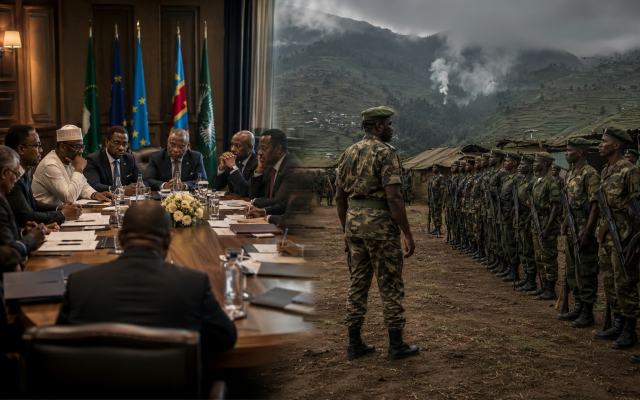
DRC: Peace Talks Continue, but AFC/M23 Keeps Intensifying Military Preparations
As peace negotiations on eastern DRC continue, AFC/M23 says it has trained 9,318 new commandos, raising concer...
 Breaking
 Breaking
Loading comments…
Reader comments
Join the conversation