





BREAKING NEWS:U.S. Sanctions Rwandan Mining Firms Over Conflict Mineral Networks Linked to M23.
The United States has imposed sanctions on several Rwandan mining companies and individuals accused of participating in networks that facilitate the movement of conflict minerals from eastern Democratic Republic of the Congo (DRC) to support the Rwanda-backed M23 armed group.
Among those sanctioned are Gasabo Gold Refinery LTD and its chairman, Jean Malic Kalima, along with three other Rwandan mining companies. The measures were announced as part of Washington's effort to disrupt what U.S. authorities describe as illicit mineral supply chains that help finance armed conflict in eastern Congo.
The decision represents one of the strongest public acknowledgments by the United States that economic networks operating through Rwanda have become central to concerns about the financing of M23. For years, the Kagame government has presented Rwanda as a model of good governance, transparency, and economic modernization. Yet the latest sanctions raise uncomfortable questions about how conflict minerals from a neighboring war zone have continued to enter regional supply chains despite repeated international scrutiny.
According to the U.S. Government, mineral wealth extracted from Congolese territory has been exploited to fund weapons purchases, pay combatants, and sustain an insurgency that has contributed to one of Africa's most severe humanitarian crises. Washington stated that the trade has fueled armed violence while exposing mining communities to forced labor, child labor, and sexual violence.
The sanctions arrive at a particularly sensitive moment for Kigali. President Paul Kagame's administration has spent years promoting Rwanda as a preferred destination for foreign investment, technological innovation, and international partnerships. The country's image has been carefully cultivated around narratives of stability, efficiency, and anti-corruption. However, sanctions targeting prominent mining actors threaten to undermine that narrative by drawing international attention back to cases in which Rwanda benefits economically from instability across the border.
Today's announcement reinforces long-standing accusations that official denials regarding support for M23 have become increasingly difficult to reconcile with mounting evidence presented by foreign governments, United Nations experts, and independent investigators. While Kigali has consistently rejected backing the rebel movement, international pressure has continued to grow as reports have documented connections between Rwanda and M23 operations in eastern Congo.
The sanctions also carry symbolic significance. They suggest that Washington is no longer willing to separate security concerns from economic networks linked to the conflict. By targeting companies and business figures rather than only armed actors, the United States is signaling that those who profit from conflict minerals may face direct financial consequences.
The announcement was framed as part of broader efforts to implement the Washington Accords for Peace and Prosperity, an agreement intended to reduce tensions between Rwanda and the DRC while promoting transparent and legally traceable mineral supply chains. U.S. officials argued that the region's mineral wealth should drive development and investment rather than conflict and instability.
For Kagame's government, the political challenge extends beyond the immediate impact of the sanctions themselves. The measures risk damaging Rwanda's international reputation at a time when Kigali has sought to position itself as a trusted global partner. Investors, donors, and foreign governments may increasingly ask whether Rwanda's economic success story can be separated from recurring crimes concerning eastern Congo's mineral resources.
The sanctions are also likely to embolden Rwandans who have long argued that powerful actors have benefited from a system in which Congolese resources are extracted while local communities bear the costs of war. To many observers, today's action represents more than a financial penalty; it is a public challenge to the credibility of Rwanda's official narrative.
As Washington expands pressure on conflict mineral networks, the message appears increasingly clear: those accused of profiting from eastern Congo's suffering are now finding themselves under direct international scrutiny. For a government accustomed to presenting itself as a regional success story, the latest sanctions mark a significant reputational setback that will be difficult to dismiss as merely another diplomatic disagreement.
Related coverage
More from Africa
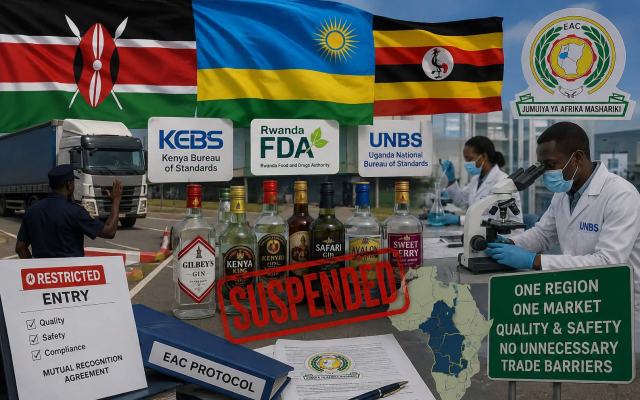
Rwanda and the EAC: Kigali’s Approach to Product Quality Control Could Put the Country at Risk
Rwanda’s suspension of dozens of imported alcoholic products has triggered objections from Kenya and Uganda, r...
 Breaking

Noeline’s Story Is Not an Exception; It Is a Mirror of Rwanda’s Broken Justice System.
For years, Rwanda has presented itself to the world as a model of good governance, accountability, and institu...
Loading comments…
Reader comments
Join the conversation