







Unmasking Rwanda’s Security Network: Paramilitary Policing, Proxy Wars, and the Mystery of the Missing Youth.
By Sheila Kamuzinzi,
published on badramatv.com
 alt="" width="1024">
For years, Rwanda has projected an image of discipline, stability, and security unlike almost any other state in central Africa. Under President Paul Kagame, the country has been praised by international institutions for its orderliness, economic modernization, and efficient governance. Kigali’s military interventions abroad are frequently framed as professional peacekeeping operations designed to stabilize fragile regions threatened by insurgency and extremism.
Yet behind this carefully cultivated image lies a darker and increasingly controversial narrative, one painted by United Nations investigators, regional analysts, human rights organizations, and critics of Kagame’s government. According to these accounts, Rwanda’s security structure functions less like a conventional national defense system and more like a highly integrated network of militarized policing, regional proxy warfare, and strategic economic enforcement.
At the center of this system is the close relationship between the Rwanda National Police (RNP) and the Rwanda Defence Force (RDF), two institutions that critics argue have become virtually indistinguishable in both doctrine and operation.
The Militarization of Policing
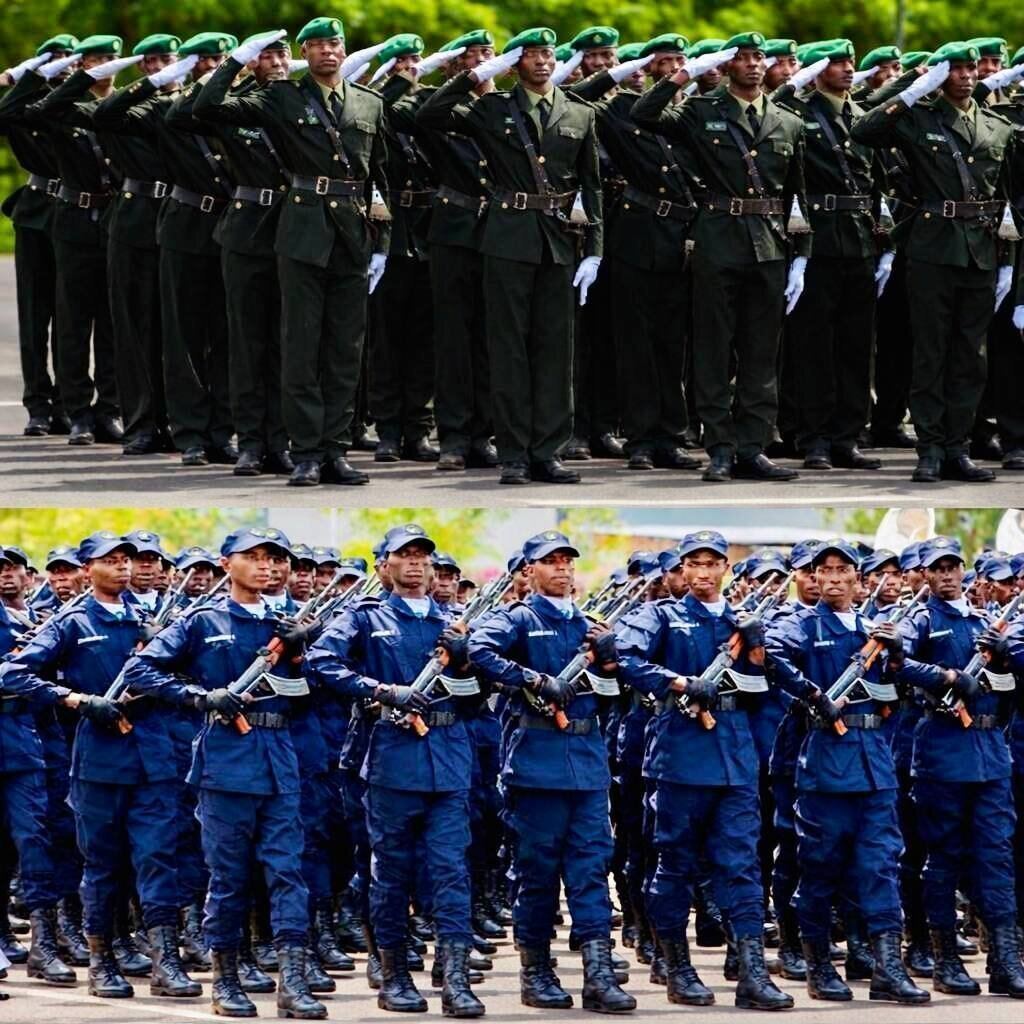
Rather than operating as a traditional civilian police force, the RNP has evolved into what many observers describe as a paramilitary extension of the state’s military apparatus. Senior army commanders routinely transition into top police leadership positions, embedding military hierarchy and battlefield strategy directly into domestic law enforcement structures.
Elite police units train in military facilities, operate under combat-style command systems, and deploy with heavy tactical weaponry more commonly associated with infantry formations than civilian policing. The distinction between police and military operations has gradually blurred, creating a security structure where civilian enforcement and military doctrine function as a single coordinated system.
This fusion of military and police authority has allowed Kigali to maintain an unusually centralized security state capable of projecting power well beyond Rwanda’s borders.
Cabo Delgado and the Rise of Rwanda’s Security Export Model
 alt="" width="1024">
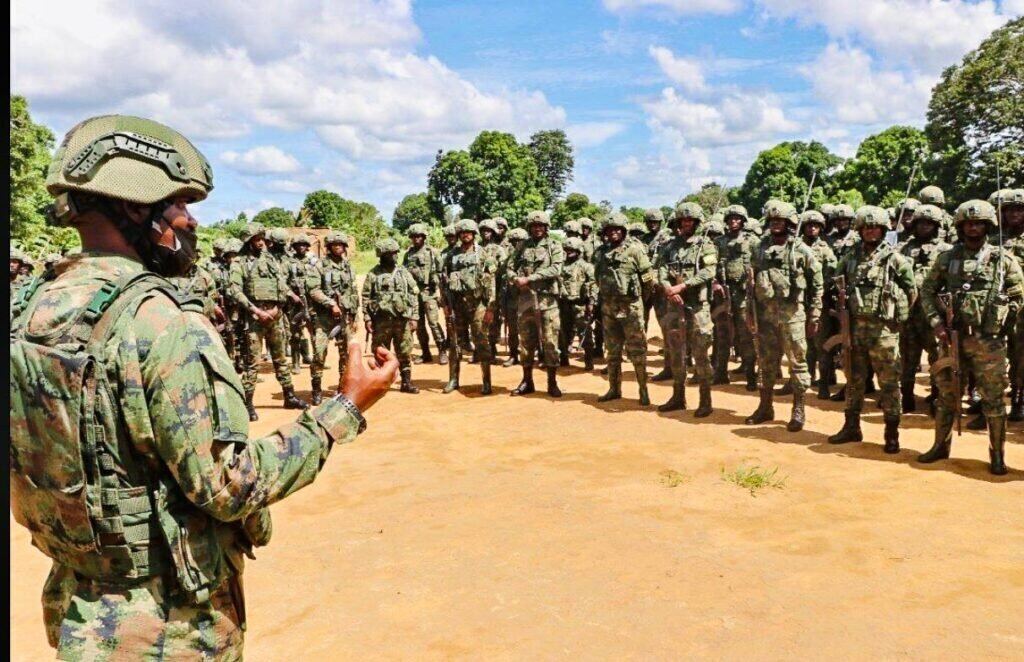
That projection became unmistakably visible in 2021, when Rwanda deployed thousands of troops and police personnel into Cabo Delgado, the gas-rich northern province of Mozambique. Officially, the intervention was launched to combat Islamist insurgents whose attacks had destabilized the region and threatened civilians. International headlines quickly praised Rwandan forces for helping retake strategic towns and restoring a measure of order where regional coalitions had struggled.
But critics argue that the operation was never solely about counterterrorism.
The geographical concentration of Rwandan deployments around Palma and Mocímboa da Praia,areas surrounding massive liquefied natural gas projects operated by multinational corporations,raised immediate suspicions among analysts. Rather than dispersing broadly throughout insurgent territory, Rwanda’s military footprint appeared heavily aligned with the protection of strategic energy infrastructure linked to global investment interests.
To observers skeptical of Kigali’s intentions, the Cabo Delgado mission represented something new in modern African geopolitics: the emergence of Rwanda as a state-managed security contractor capable of exchanging military intervention for financial compensation, diplomatic leverage, and strategic partnerships.
Protecting Energy Corridors and Corporate Interests
As European Union security financing began reaching political and financial limits, Rwanda reportedly shifted toward direct bilateral arrangements with the Mozambican government. This bypassed broader regional mechanisms such as the Southern African Development Community and granted Kigali far greater operational autonomy.
Human rights organizations warned that such arrangements reduced external oversight while obscuring civilian casualty reporting and battlefield accountability. Critics also argue that Rwanda’s growing role in Cabo Delgado demonstrates how modern security operations can evolve into profitable geopolitical instruments, where military deployments simultaneously reinforce diplomatic influence and economic positioning.
The intervention increasingly came to be viewed not simply as a regional stabilization mission, but as part of a wider strategy in which Rwanda markets military efficiency as a form of strategic export.
Eastern Congo and the Proxy War
Yet the most explosive accusations surrounding Rwanda’s regional security architecture lie not in Mozambique, but across the border in the Democratic Republic of Congo.
Eastern Congo has endured decades of instability fueled by armed groups, ethnic conflict, foreign interference, and competition over some of the world’s most valuable mineral deposits. Multiple United Nations Group of Experts reports have repeatedly alleged that Rwanda plays a direct role in sustaining parts of this conflict through support for proxy armed movements, particularly the M23 rebel group.
The M23 insurgency has been accused of carrying out executions, forced displacement campaigns, and territorial seizures across North Kivu. UN investigators and human rights organizations have documented allegations that Rwandan military personnel supplied operational support, intelligence, weapons, and strategic coordination to the rebels during major offensives.
Kigali has consistently denied these allegations, insisting that its security actions are defensive responses to hostile militias operating near its border.
The Economics of “Managed Chaos”
Critics, however, argue that Rwanda benefits strategically from maintaining controlled instability in eastern Congo.
The region contains enormous reserves of coltan, gold, tin, tungsten, and other strategic minerals essential to global technology and manufacturing industries. According to investigators and regional observers, prolonged insecurity weakens the Congolese state’s authority while enabling sophisticated smuggling networks to move valuable resources across porous borders.
Once inside Rwanda, these minerals can enter formal export channels, masking their origins within the wider global supply chain.
To critics of Kagame’s government, this creates what they describe as a “managed chaos” doctrine, a cycle in which instability justifies intervention, intervention enables access, and access sustains economic and geopolitical leverage.
Under this framework, armed conflict becomes not merely a security issue, but a mechanism through which regional influence and economic advantage are continuously reproduced.
The Missing Youth Mystery
But perhaps the most haunting dimension of Rwanda’s expanding security state is not external. It is domestic.
Over the past three decades, Rwanda has recruited enormous numbers of young people into military and security structures. Yet demographic researchers and activists point to a glaring discrepancy between estimated historical recruitment figures and the number of officially visible active personnel today.
The gap has fueled persistent questions that remain largely unanswered.
Where did these recruits go?
Human rights organizations have long documented allegations involving the forced roundup of vulnerable youth, street children, petty offenders, and marginalized populations from state-run transit centers. Some were allegedly transferred to isolated military-style training facilities, where they disappeared from civilian registries altogether.
Facilities such as Mudende have repeatedly surfaced in testimonies from former detainees and rights advocates.
Hidden Casualties and Silent Losses
At the same time, Rwanda’s repeated denials of direct combat involvement in eastern Congo create another layer of secrecy surrounding casualties. Critics argue that soldiers and proxy fighters killed during unofficial operations are rarely acknowledged publicly.
Families often receive no formal notification, no military recognition, and no public accounting for the dead.
Others are believed to have entered unofficial security deployments operating across fragile African states outside the transparency of formal military payroll systems. These deployments reportedly include infrastructure protection, mining concession security, and embedded advisory roles tied to regional political interests.
The result is a shadowy manpower system in which thousands of individuals may exist beyond public visibility, neither formally recognized soldiers nor ordinary civilians.
Rwanda’s Two Global Images
Internationally, Rwanda continues to receive praise for maintaining internal order in a region often defined by instability. Kigali’s government presents itself as a disciplined and capable force confronting terrorism, protecting sovereignty, and contributing to African security solutions.
Yet across central and southern Africa, critics increasingly describe a different reality: a state whose security institutions have evolved into interconnected instruments of military influence, political control, and economic strategy.
From the LNG corridors of Cabo Delgado to the mineral-rich hills of eastern Congo, Rwanda’s security apparatus now operates far beyond the boundaries of ordinary policing or national defense.
Whether viewed as a stabilizing force or an expanding regional power exploiting conflict for strategic advantage depends largely on which narrative one chooses to believe.
What remains undeniable, however, is that the system’s human cost, particularly among Rwanda’s youth, continues to deepen in silence.
For thousands of families still searching for answers, the most important question remains unresolved:
How many disappeared into the machine, and never came back?
Related coverage
More from Investigations
DRC's Critical Minerals: The Plunder Must End, and Its Sovereignty Must Be Respected
This report examines how the illicit exploitation and trafficking of critical minerals continue to fuel confli...
RPF-Inkotanyi Moves to Offload Business Empire Amid Mounting Fears of More U.S. Sanctions
The ruling RPF-Inkotanyi is reportedly restructuring business interests held through Crystal Ventures Limited...

Loading comments…
Reader comments
Join the conversation