






Invest in Rwanda at Your Own Risk: The Hidden Cost of Political Uncertainty.
For years, Rwanda has marketed itself as one of Africa’s premier investment destinations. International investors are regularly presented with images of clean streets, efficient public administration, low levels of petty corruption, and a government that prides itself on attracting foreign capital. Kigali has become a symbol of order and stability in a region often associated with political and economic volatility.
Yet beneath this carefully cultivated image lies a growing concern that many investors discuss privately but rarely express publicly: the fear that political considerations can outweigh commercial rights.
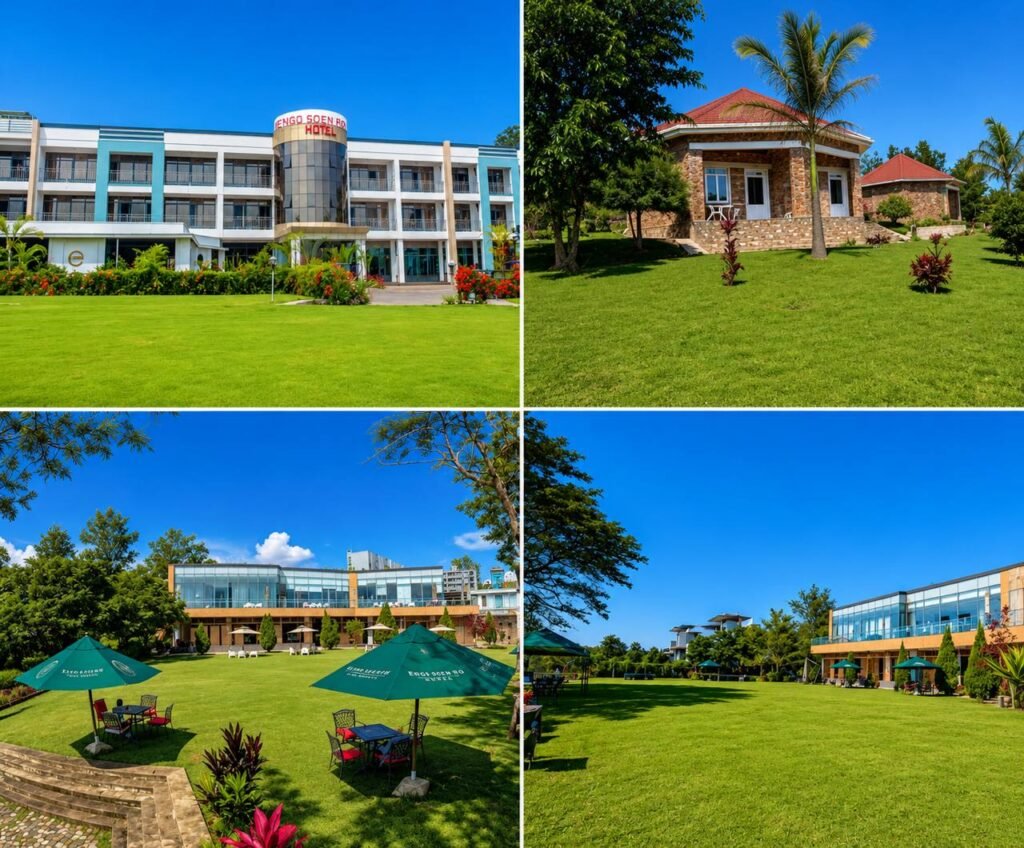
The recent decision by the Rwanda Development Board (RDB) to suspend the operations of four hotels, Century Park Hotel and Residences in Kigali, Dove Luxury Hotel in Gicumbi, Highland Resort in Rulindo, and Nengo Eden Park Hotel in Rubavu, has once again raised questions about the nature of investment security in Rwanda. RDB justified the closures by citing failures related to hygiene, safety, licensing, and service standards. While every country has a legitimate responsibility to regulate businesses operating within its borders, critics argue that the issue is not regulation itself but the manner in which it is enforced.
A recurring question emerges whenever such closures occur. If a hotel has hygiene deficiencies, why is closure often preferred over fines, warnings, or compliance orders? If licensing requirements have not been met, why were the establishments allowed to operate for extended periods in the first place? How can a business spend years welcoming guests, employing workers, paying taxes, and contributing to the tourism sector before regulators suddenly determine that it lacks the necessary authorization to continue operating?
These questions matter because investors seek predictability. In most jurisdictions, regulators generally provide businesses with opportunities to correct deficiencies before resorting to measures that threaten their survival. In Rwanda, the preference for abrupt administrative action creates uncertainty and reinforces the perception that regulatory enforcement is sometimes selective.
Such concerns are not limited to the recent hotel closures. They have been amplified by controversies involving high-profile investments and property disputes, none more prominent than the case of Château Le Marara in Karongi District.
The luxury hospitality project was developed by Dr. Christian Marara, a former opposition politician who spent years in exile following political disagreements with the ruling establishment during the early 2000s. After returning to Rwanda, Marara largely withdrew from political activity and focused on business, investing heavily in tourism and hospitality. His Château Le Marara project represented not only a substantial financial commitment but also what many observers viewed as a test of whether political history could be separated from economic participation.
In 2025, the property became the center of national attention following a public dispute surrounding a wedding event that generated significant debate on social media. Shortly afterward, authorities moved to suspend the hotel’s operations, citing licensing and regulatory concerns. Government officials maintained that the decision was based entirely on compliance issues. Critics, however, questioned the timing of the intervention and asked why concerns serious enough to justify closure had apparently not prevented the hotel from operating previously.
The controversy intensified when management of the property became associated with The Retreat, a luxury hospitality brand linked to Josh and Alissa Ruxin. The Ruxins are prominent figures within Rwanda’s business and philanthropic community, and Josh Ruxin has publicly been described by President Paul Kagame as a close friend. This connection fueled speculation among government critics and opposition figures, who argued that the case reflected a broader pattern in which politically connected actors ultimately gain influence over valuable assets that encounter regulatory difficulties.
The Château Le Marara controversy continues to be cited by critics as an example of what they describe as the blurred boundaries between political power and economic opportunity in Rwanda.
At the heart of these debates lies a larger question about the concentration of wealth and influence within the country’s economy. For years, opposition politicians, independent commentators, former insiders, and some international analysts have argued that economic power in Rwanda is increasingly concentrated among individuals and entities perceived to be close to the ruling establishment.
The irony is that Rwanda’s strongest selling points,security, order, and administrative efficiency,do not automatically address these concerns. Clean streets do not guarantee secure property rights. Efficient bureaucracy does not necessarily ensure equal treatment. Low crime rates do not eliminate fears of regulatory unpredictability. Investors are ultimately concerned with one fundamental question: whether success can be sustained independently of political relationships.
The government insists that Rwanda remains one of the most attractive destinations for investment in Africa, and many investors continue to thrive within its economy. Yet the recurring controversies surrounding business closures and property disputes involving preferential treatment continue to generate doubts that cannot be dismissed simply through promotional campaigns or favorable rankings.
For potential investors, the lesson is to understand that the country’s investment environment cannot be evaluated solely through official statistics and marketing materials. Political dynamics, perceptions of influence, and concerns about regulatory consistency are factors that deserve equal consideration.
In the end, the most important question is not whether Rwanda is clean, organized, or secure. The question is whether investors can be confident that their property, businesses, and economic future will remain protected regardless of whom they know or do not know in the corridors of power.
Until that question is answered convincingly, concerns about political risk will continue to shadow Rwanda’s investment story, no matter how impressive the official narrative may appear.
Related coverage
More from Investigations
DRC's Critical Minerals: The Plunder Must End, and Its Sovereignty Must Be Respected
This report examines how the illicit exploitation and trafficking of critical minerals continue to fuel confli...
RPF-Inkotanyi Moves to Offload Business Empire Amid Mounting Fears of More U.S. Sanctions
The ruling RPF-Inkotanyi is reportedly restructuring business interests held through Crystal Ventures Limited...

Loading comments…
Reader comments
Join the conversation