







How Kagame and the RPF Turned Genocide into Their Last Political Card.
The uproar surrounding Canadian journalist Judi Rever's appearance at Griffith University in Australia says a lot about Rwanda today. Not necessarily about Judi Rever herself, but about the way the RPF government reacts whenever uncomfortable questions are raised.
Let us be clear from the beginning: the 1994 Genocide against the Tutsi happened. It was planned, organized, and executed against a population targeted because of who they were. That truth is not negotiable.
At the same time, not every discussion about Rwanda can be reduced to genocide denial.
That is where the problem begins.
Judi Rever's work is deeply controversial. In her book In Praise of Blood, she advances claims that many genocide survivors, historians, researchers, and legal experts reject. In Chapter 6, La cinquième colonne, she discusses allegations that elements of the RPF infiltrated Interahamwe groups and participated in killings of Tutsi in some areas. She also presents arguments that many readers see as blurring the distinction between the genocide committed against the Tutsi and crimes committed during the war.
For many survivors, such claims cross a line. They are viewed not as historical inquiry but as narratives that distort the nature of the genocide itself.
Yet there is another reality that deserves discussion.
The fact that some of Judi Rever's claims are disputed does not automatically mean every conversation about the RPF's conduct should be shut down. In Rwanda, these two issues are frequently merged together. The moment someone raises questions about alleged crimes committed by RPF members, political repression, regional military interventions, or the conduct of the state, the discussion often stops being about those issues and becomes a debate about genocide denial.
If someone questions the conduct of the RPF during the war, they are accused of genocide denial.
If someone talks about alleged crimes committed by RPF soldiers, they are accused of genocide denial.
If someone questions Rwanda's political system, they are accused of genocide denial.
If someone challenges Paul Kagame, sooner or later the conversation returns to genocide denial.
After more than three decades in power, the RPF increasingly appears unable to separate itself from the genocide it helped stop.
This is perhaps the greatest political paradox in modern Rwanda.
The liberation legacy was once the RPF's strongest source of legitimacy. Today, it often appears to be its primary shield against accountability.
There is a dangerous zero-sum logic that has poisoned discussions about Rwanda for years.
On one side stands Kagame's government and the political establishment built around the RPF. Their message often amounts to this: because the Genocide against the Tutsi happened, discussion of the accusation crimes committed by the RPF should remain secondary, limited, or treated with suspicion. Questions about political repression, opposition figures, disappearances, military conduct during and after the war, or Rwanda's role in regional conflicts are frequently pushed back toward the same subject. Before long, the conversation is no longer about accountability. It is about genocide.
On the other side are people who take real or alleged crimes committed by members of the RPF and use them to cast doubt on the genocide itself. Instead of separating the genocide from other crimes, they collapse everything into a single narrative where responsibility is blurred,where the organized extermination of the Tutsi becomes merely one tragedy among many.
Judi Rever's work sits directly in the middle of this conflict. Some of her claims regarding the conduct of the RPF deserve scrutiny and debate. Others, particularly passages that many survivors and scholars believe blur the distinction between the Genocide against the Tutsi and wartime crimes, have generated outrage for precisely that reason.
But Rwanda's tragedy is that these two debates are constantly fused together when they should be kept separate.
The first question is whether the Genocide against the Tutsi happened. The answer is yes.
The second question is whether members of the RPF committed crimes that deserve investigation, prosecution, acknowledgment, or accountability. That question should also be open to discussion.
Neither truth cancels the other.
Recognizing the reality of the genocide does not require silence about other abuses.
Discussing crimes committed by RPF members does not erase the genocide.
The truth should be capable of surviving both conversations.
Yet Rwanda's political establishment often behaves as though any examination of the RPF's record automatically threatens the historical truth of 1994.
It does not.
The genocide happened because hundreds of thousands of defenseless Tutsi were systematically hunted and murdered over one hundred days. That reality stands on its own evidence. It does not depend on the political fortunes of Paul Kagame or the RPF.
In fact, tying the truth of the genocide too closely to the reputation of a ruling party creates its own danger.
When a government presents itself as the sole guardian of memory, criticism of the government becomes treated as criticism of memory itself.
That is precisely what seems to happen whenever figures like Judi Rever enter the discussion.
Instead of separating two different questions, whether her claims are accurate and whether the government should be open to scrutiny, the debate becomes merged into a single accusation; the result is confusion.
A person can reject claims that distort the genocide while still demanding accountability for abuses committed by state institutions.
A person can defend historical truth while criticizing political power.
A person can honor survivors without accepting that every government policy must be beyond question.
These ideas should not be controversial.
Unfortunately, after more than thirty years in power, Kagame's political system increasingly appears unable to function without constantly returning to 1994.
The irony is that the Genocide against the Tutsi is one of the most documented crimes in modern African history. Its truth does not need to be protected by political intimidation, loyalty tests, or the silencing of uncomfortable questions. Historical truth should be strong enough to withstand scrutiny.
Every nation has defining moments. Rwanda's is undoubtedly 1994. But no country can build its entire future on a single chapter of its past.
The tragedy of the Genocide against the Tutsi deserves remembrance, dignity, and protection from distortion. It should never become a substitute for political debate, nor should it become a shield against accountability.
Because when every question receives the same answer, eventually people stop believing the answer.
And that may be the greatest danger facing Rwanda's memory politics today.
Related coverage
More from Rwanda
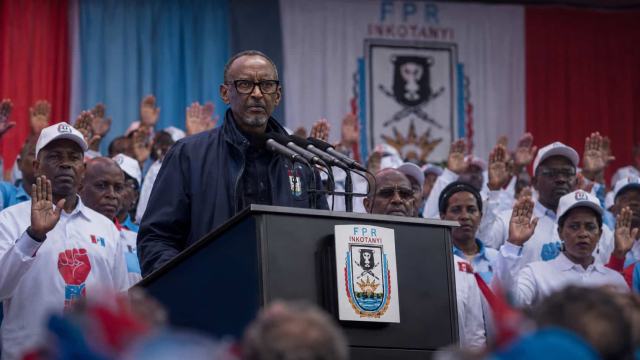
Rwanda: Oaths of Loyalty Under Scrutiny as Critics Warn of Political Intimidation
A debate over political loyalty oaths in Rwanda is raising questions about freedom of association, the right t...
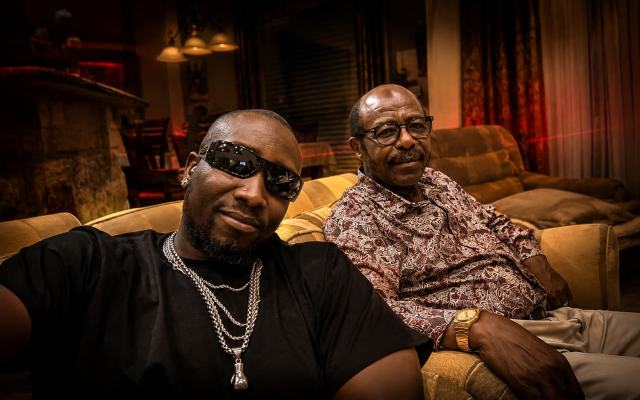
BADRAMA: “They Say I Must Be Killed Because I Crossed a Red Line”
BADRAMA says his human-rights advocacy and political commentary have placed his life in danger, alleging repea...
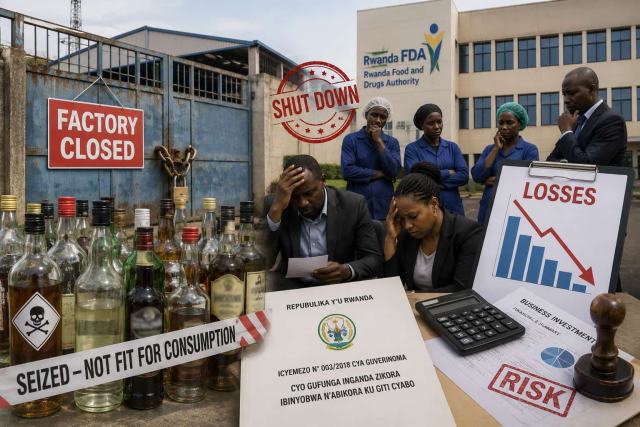
Disorderly Governance within the FPR Inkotanyi Administration as a Major Cause of Losses for Many Investors
The closure of several alcoholic beverage manufacturers has renewed debate over Rwanda FDA’s oversight, coordi...
Loading comments…
Reader comments
Join the conversation