By Sheila Kamuzinzi.
Published on badramatv.com.
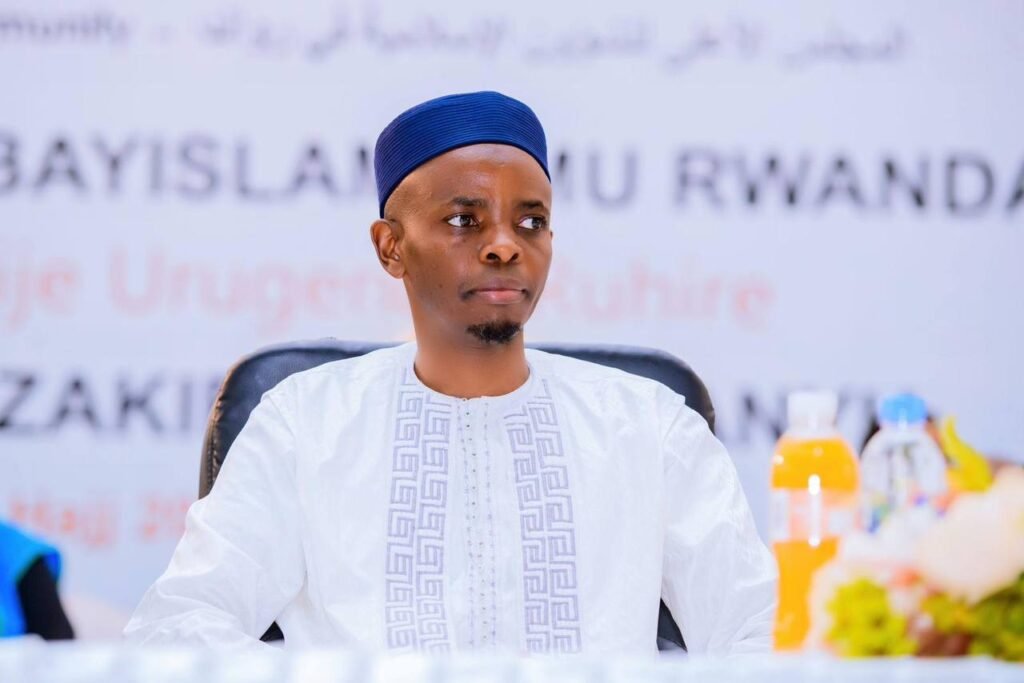
In 2018, Rwanda’s government introduced restrictions on mosque loudspeakers under national anti-noise pollution regulations. Officials presented the move as part of a broader campaign to modernize urban governance, enforce public order, and regulate excessive noise from religious institutions, businesses, and public spaces.
For many Muslims in Rwanda, however, the issue felt far more significant than a technical sound regulation. The Adhan, the Islamic call to prayer, is not only a religious announcement but also a public expression of faith, identity, and community presence. Restricting it raised fears that core religious practices could continue only within boundaries defined by the state.
The controversy quickly evolved into a broader political debate about religious freedom, state authority, and the growing centralization of power under President Paul Kagame’s government.
For years, Rwanda’s authorities justified restrictions on the Adhan through arguments about noise pollution, modernization, urban order, and regulation. Mosques were pressured to reduce or silence loudspeaker use, especially during early morning Fajr prayers. The policy was presented as a neutral administrative measure applied equally to all religious institutions.
According to reports, President Kagame told Muslim leaders on 25 February 2026 that the Adhan would once again be allowed publicly through mosque loudspeakers, particularly for Fajr prayers. The justification given was not that religious freedom had been wrongly restricted, but that “people had become more civilized and understanding.”
This raised several contradictions:
- If the Adhan were truly a public-order or noise issue, why would its permissibility depend on presidential approval rather than constitutional religious rights?
2.The government had previously framed the restrictions as legal and technical regulations. Kagame’s personal intervention suggested the issue was political from the beginning, reinforcing criticism that religious freedoms in Rwanda operate through executive permission rather than guaranteed rights.
3.Critics argued that the same state which restricted the Adhan now presented itself as the authority capable of restoring it. They viewed this as part of a system in which freedoms are first limited administratively and later selectively restored to strengthen political loyalty and dependence on presidential power.
4.The explanation that society had become “more understanding” appeared to contradict the original justification for the ban. Critics asked why the restrictions had been imposed so aggressively in earlier years if coexistence and tolerance were always possible.
5.Rwanda’s government often presents the country internationally as a model of religious tolerance and unity. Yet the need for Muslim leaders to negotiate directly with political authority over a core religious practice suggested that religious autonomy remained fragile under centralized state control.
The Impact on Rwanda’s Muslim Community
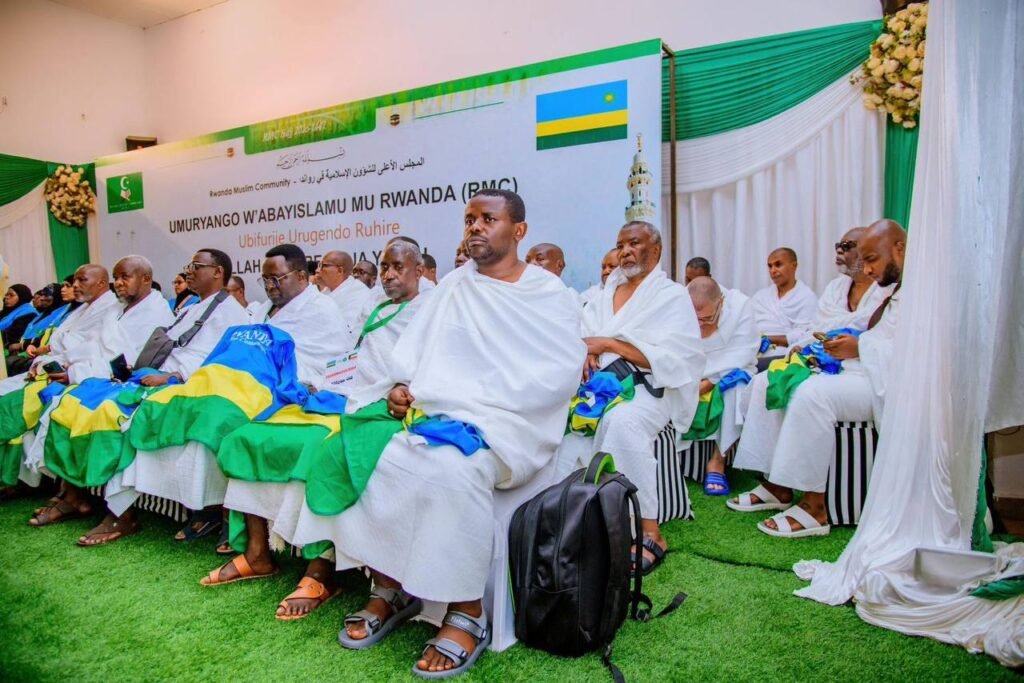
The restrictions emerged during a wider government crackdown on religious institutions across Rwanda. Thousands of churches, particularly smaller Pentecostal churches, were closed for allegedly failing to meet regulations concerning infrastructure, hygiene, licensing, and noise control.
Initially, many Muslims believed their community would avoid major confrontation with authorities. Historically, Rwanda’s Muslim population had maintained relatively stable relations with the state, especially after the 1994 genocide against the Tutsi, during which many Muslims were recognized for protecting civilians. Compared with opposition groups, independent journalists, or some evangelical movements, Muslims were often viewed as politically cautious and non-confrontational.
That perception changed when mosque loudspeakers became targets of enforcement measures.
For many believers, the restrictions carried deep symbolic meaning. The Adhan represents continuity, visibility, and collective worship. Limiting its public expression created concern that religious freedoms were becoming conditional upon government approval.
Some Muslim leaders attempted quiet negotiations with authorities over speaker volume and scheduling, while others feared that open resistance could provoke broader pressure against mosques and religious institutions.
Fear, Silence, and Self-Censorship
The controversy also highlighted the risks associated with public criticism inside Rwanda.
Many religious leaders avoided direct confrontation with authorities even when privately uncomfortable with the restrictions. Some feared losing mosque registrations, attracting surveillance, or exposing their communities to political pressure.
Critics argue that this climate encourages widespread self-censorship. Instead of openly defending constitutional freedoms, religious institutions often seek quiet accommodation with the state in order to survive.
According to opponents of the government, this weakens religious independence without requiring mass arrests or openly violent repression. Administrative power alone becomes enough to shape and discipline public life.
The debate surrounding the Adhan restrictions became larger than the Muslim call to prayer itself.
Supporters of the government view the regulations as part of Rwanda’s broader effort to maintain order, discipline, modernization, and equal enforcement of the law. Critics, however, believe the controversy revealed a deeper political problem: a system in which constitutional freedoms increasingly depend on executive approval rather than existing as protected rights beyond government interference.
For many observers, the experience of Rwanda’s Muslim community became a warning about the fragility of religious freedom under highly centralized political power.
At the center of the debate remains a fundamental question: when the state gains authority to decide how and whether core religious practices may continue publicly, does freedom of religion remain truly free?
This article raises an important and deeply troubling issue about freedom, democracy, and religious rights in Rwanda. The restriction of the Adhan cannot be viewed only as a simple noise-control measure; it reflects a broader pattern in which fundamental freedoms appear to depend on political permission rather than constitutional protection. In a democratic society, religious freedom, freedom of expression, and community identity should not be granted or withdrawn at the discretion of those in power. I strongly denounce any system that uses administrative control, fear, and silence to limit people’s rights. Rwanda belongs to all Rwandans, not to one ruling party or one leader. Those who believe in freedom, democracy, justice, and human dignity must continue to call out abuses of power and stand with every community whose rights are restricted. The fight for a free and democratic Rwanda is also a fight for religious freedom, equality before the law, and respect for every citizen’s dignity.
Religious freedom in Rwanda has become conditional on political loyalty. The RPF-Kagame regime has hijacked religious institutions and turned many religious leaders into instruments of political control. This is not only about Muslims or the Adhan; it affects all religions in Rwanda. When religious leaders fear speaking the truth, when they praise political power instead of defending God’s people, and when worship spaces are controlled by the state, religion loses its independence. Rwanda needs true freedom of worship, freedom of conscience, and religious leaders who serve God and the people, not the regime. This level of control is unacceptable, disrespectful to all faiths, and must be called out and stopped.