By Sheila Kamuzinzi,
Published on badramatv.com.
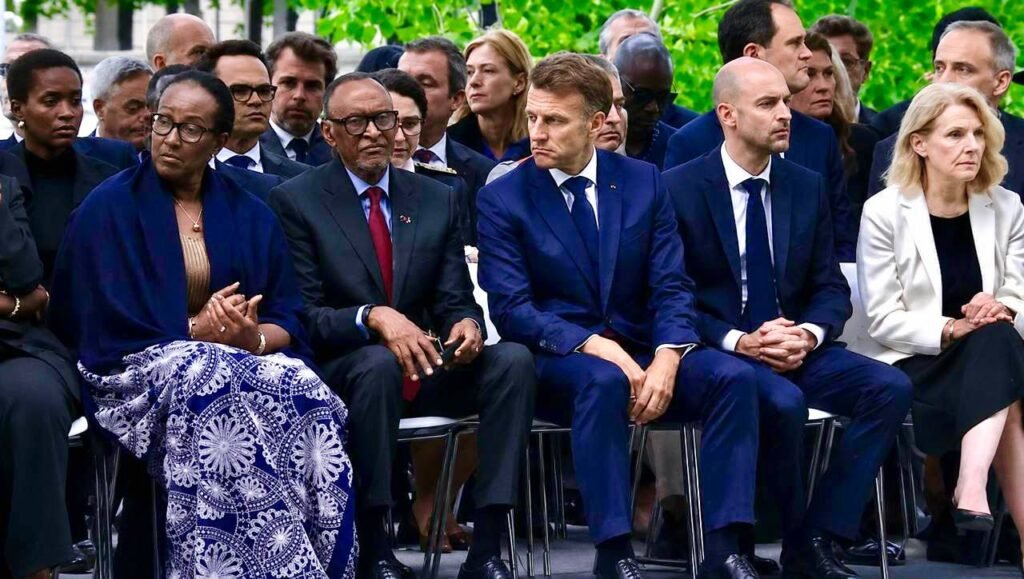
The inauguration of a new Genocide against the Tutsi memorial in Paris highlights a contradiction that Rwanda’s government has pointed out for years.
For decades, France was portrayed by Rwanda’s leadership as a state that bore serious responsibility for its role before and during the 1994 Genocide against the Tutsi. Accusations against France became a central part of official rhetoric, public commemorations, and political discourse. The issue was repeatedly presented as a matter of justice, accountability, and historical truth.
Today, the same French government is welcomed as a partner in remembrance ceremonies and diplomatic cooperation.
This shift is not evidence of consistency; it demonstrates how genocide memory can be emphasized, softened, or redirected depending on the political interests of those in power.
The Kagame regime has turned the memory of the Genocide against the Tutsi into one of its most powerful political tools. References to the genocide are frequently used to discourage scrutiny of government actions and to portray political opponents as threats to national unity.
The genocide ideology or divisionism has at times been used to discredit dissenting voices, journalists, activists, and opposition figures.This creates an environment in which genuine debate becomes difficult because disagreement with government policy can be portrayed as hostility toward the national memory of the genocide itself.
The result, they say, is that remembrance becomes closely tied to political authority.
Human rights organizations, independent journalists, and exiled activists have repeatedly argued that criticism of governance, human rights practices, economic policies, or political freedoms should be treated separately from the history of the genocide. These issues are often merged together in public discourse, making accountability more difficult.
The genocide narrative has also been used internationally to deflect attention involving human rights abuses, restrictions on political freedoms, and suppression of dissent.
The changing relationship with France is often cited as an example. When France was politically useful as a target of criticism, its historical role was emphasized relentlessly. As diplomatic and strategic interests evolved, public hostility gave way to partnership and joint memorial projects. The facts of history did not change. What changed were political calculations.
This is why many opponents of the government describe the issue not as remembrance, but as control over remembrance; where the memory of one of the greatest tragedies in Rwanda’s history has increasingly become intertwined with the political interests of the ruling establishment.
The central concern is that a national tragedy belonging to all Rwandans should never become a political instrument used to strengthen power, silence dissent, or shape international perceptions. Genuine remembrance requires consistency, openness to scrutiny, and the ability to separate historical memory from the interests of those who govern in its name.