While billions flow into luxury projects and controversial investments, many Rwandan pensioners say retirement has become a struggle for survival.
By Sheila Kamuzinzi,
published on badramatv.com.
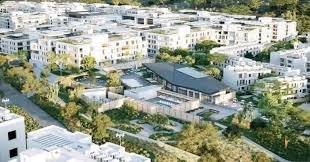
For decades, millions of Rwandan workers faithfully contributed part of their salaries to the national pension system with the hope that, one day, after years of labor, they would retire with dignity.
Teachers, civil servants, factory workers, drivers, and small business employees all placed their trust in the Rwanda Social Security Board (RSSB) ,the institution responsible for managing pensions and social protection schemes across the country.
But today, growing criticism surrounds the very institution meant to secure the future of ordinary citizens.
Critics, economists, and affected residents increasingly argue that RSSB has drifted away from its original mission, transforming instead into a financial engine for elite real estate projects, politically connected investments, and prestige developments inaccessible to the very workers whose savings fund them.
Beneath Kigali’s modern skyline and polished image, frustration is quietly growing.
Pensioners Struggling While Luxury Projects Rise
The contrast between RSSB’s investments and the daily reality of pensioners has become impossible for many Rwandans to ignore.
While billions of francs were invested in luxury developments such as Vision City in Kagugu, where some houses were initially priced above Rwf100 million, thousands of pensioners survived for years on monthly payouts as low as Rwf5,200.
Even after pension adjustments increased the minimum payout to approximately Rwf13,000, many retirees say the amount remains far below the rising cost of living.
For elderly citizens already battling inflation, the pension often fails to cover
- food,
- rent,
- medicine,
- transportation,
- and other basic necessities.
Meanwhile, the very developments built using pension contributions remain financially out of reach for ordinary workers.
Critics say this reflects a deeper structural imbalance:
the savings of low-income citizens are increasingly being used to finance high-end projects that primarily benefit wealthier groups and politically connected investors.
When Vision City reportedly struggled with hundreds of unsold units, RSSB was forced to reduce prices and commit additional resources to stabilize the investment, raising further questions about financial planning and accountability.
Auditor General Reports Deepening Concerns
Public concerns surrounding RSSB are not based on perception alone.
Over recent years, Auditor General reports have repeatedly highlighted troubling patterns involving underperforming investments and questionable asset management.
Among the findings:
- more than Rwf105 billion tied up in idle land,
- approximately Rwf137 billion invested in equity projects generating little or no return,
- and long-standing concerns over delayed or inefficient investment performance.
For critics, these reports reinforce fears that pension funds are being exposed to politically motivated “prestige projects” rather than sustainable investments designed to protect contributors and retirees.
Economists warn that when pension systems prioritize risky or low-return projects, ordinary contributors ultimately bear the burden through lower payouts and declining confidence in the system.
The Kigali Golf Course Controversy
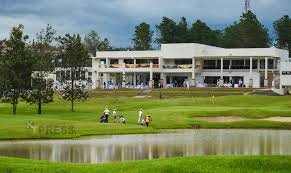
One of the most controversial RSSB-linked projects in recent years has been the Kigali Golf Course development.
The multi-billion rwf project was promoted as a symbol of Rwanda’s transformation and international attractiveness. However, controversy intensified after large sections of the golf course were reportedly damaged shortly after construction.
According to reporting by Taarifa, problems allegedly began when suppliers ignored critical soil analysis recommendations requiring specialized chemicals and fertilizer treatment.
Large portions of the golf course were later damaged, forcing costly rehabilitation efforts only months after completion.
The controversy sparked broader questions about procurement procedures, project oversight, and the management of pension-funded investments.
Taarifa reported that it contacted senior officials, including board chairman Alain Ngirinshuti, with detailed questions regarding:
- financial management,
- contractor selection,
- non-competitive tenders,
- accountability mechanisms,
- and expected returns for pension contributors.
According to the publication, Ngirinshuti initially promised responses but later stopped answering calls.
RSSB Director-General Regis Mugemanshuro also reportedly not responsive to requests for comment.
Among the unanswered questions raised publicly were:
- Why were some contracts allegedly issued without competitive bidding?
- Why was the same contractor reportedly hired to maintain the golf course before officially handing it over?
- How would contributors recover returns from a project reportedly valued at more than Rwf19 billion?
- And who would ultimately bear responsibility for reported financial losses linked to the damaged course?
The lack of public answers has only fueled further scrutiny.
Forced Relocations and “Economic Apartheid”
Beyond financial controversies, RSSB-linked urban development projects have also triggered social tensions in several Kigali neighborhoods.
In areas such as Kangondo and Kibiraro, commonly referred to as Bannyahe, families displaced during redevelopment operations accused authorities of prioritizing luxury construction over the welfare of long-term residents.
Some displaced residents described the process as a form of “economic apartheid,” arguing that compensation packages failed to reflect the true value of their land and livelihoods.
Others said they were pushed into relocation schemes that created new financial burdens they could not sustain.
For many critics, these redevelopment projects symbolize a broader model of economic growth that increasingly favors elite urban expansion while lower-income citizens absorb the social costs.
Rising Contributions, Declining Confidence
As public frustration grows, the government has also moved to increase mandatory pension contributions from 6% to 12%.
Officials argue that the reform is necessary to ensure long-term sustainability within Rwanda’s pension system.
But critics question whether workers are being asked to contribute more in order to compensate for weak returns from underperforming investments and costly development projects.
For many contributors, confidence in the pension system has weakened significantly.
Workers continue contributing larger portions of their salaries while watching billions flow into projects that appear disconnected from their everyday realities.
A System Serving Who?
The Rwanda Social Security Board was originally created to provide security and dignity for citizens after retirement.
But for many Rwandans today, that promise feels increasingly distant.
For the elderly pensioner surviving on an income too small to keep pace with inflation…
for families displaced from neighborhoods targeted for luxury redevelopment…
and for workers watching pension billions disappear into controversial investments…
the question is becoming increasingly difficult to avoid:
Who exactly is Rwanda’s social security system serving?
For critics, the answer is deeply troubling.